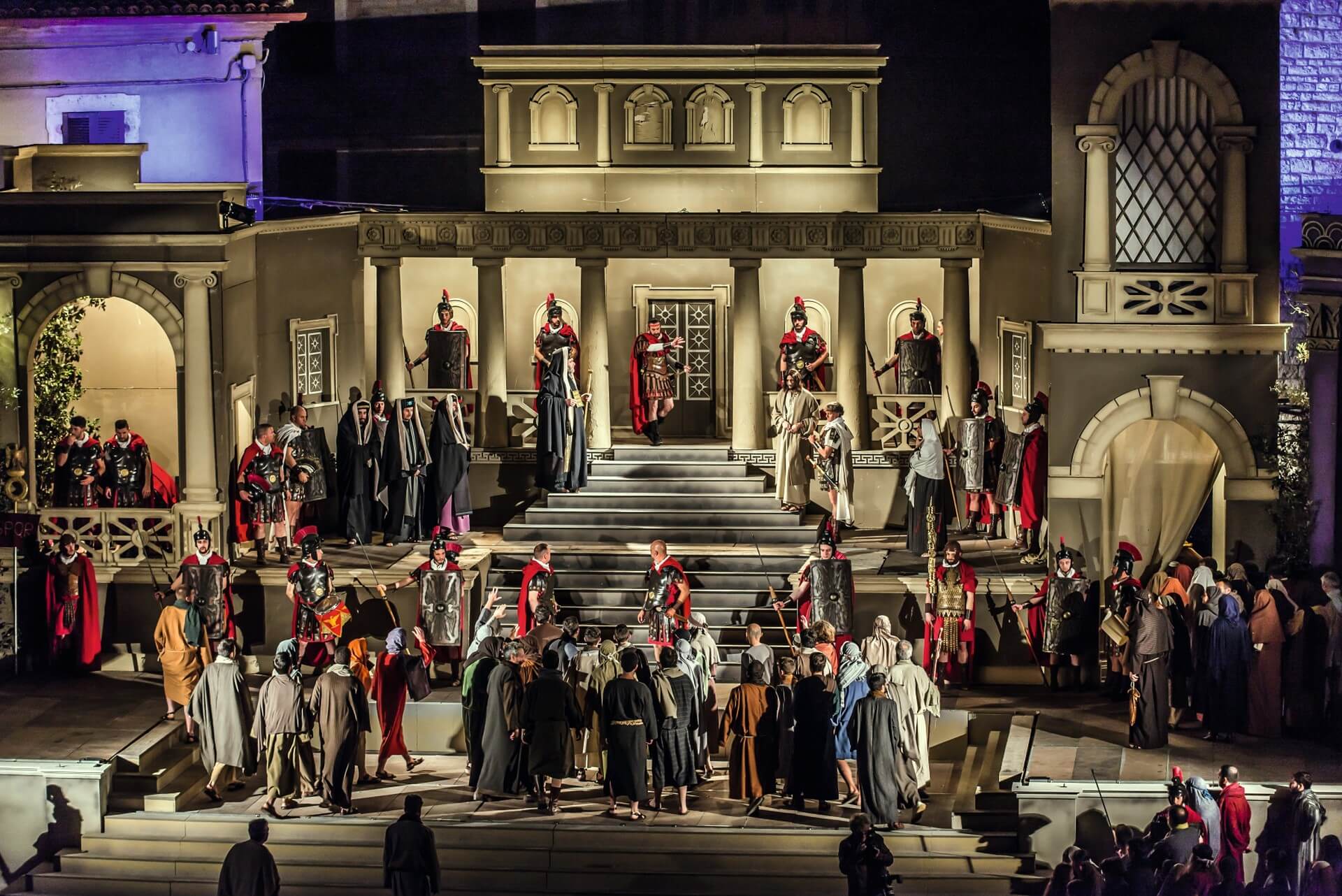

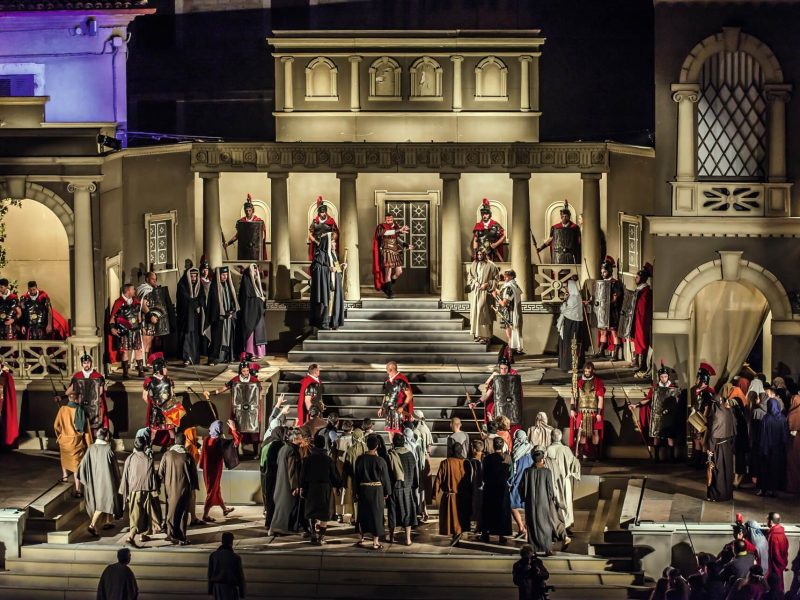
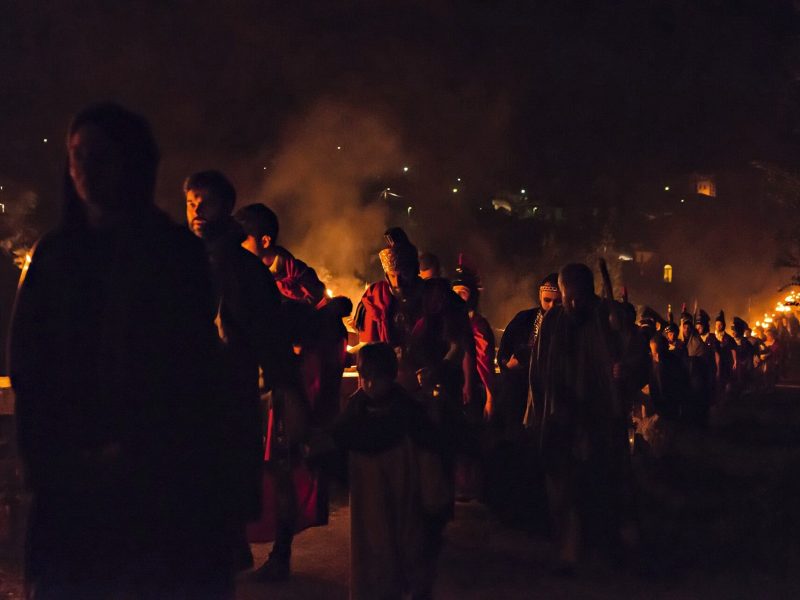
One can hardly describe the emotions raised by the show that comes to life in Cantiano on Good Friday. While the day slowly dies, the whole town gets brightened by the quivering little flames of candles and torches. It looks like the roads reflect the stars in the sky. It is the effect of “La Turba”, the most ancient and extraordinary tradition in Cantiano. More than 250 extras, all from the town, play the protagonists of the Passion, death and Resurrection of Jesus Christ: the humbles and the powerful, the soldiers and the disciples, the Messiah and his executioners, enacting an incredibly suggestive performance of popular theatre. The ascent to the Calvary moves from Luceoli square and ends in St.Ubaldo’s, where three crosses brightened by the torches are raised during the performance of a Te Deum. A sudarium falls down from the empty cross in the middle, representing the Christ’s resurrection and the message of peace and hope that goes with it, and marks the end of the show. This event cannot be separated from the spirit of Cantiano, where it is lived with great participation and pride. Indeed, “Turba” means “crowd of people”, and the people of Candiano are the great protagonists of the whole day. To make sure that everybody can know this event, the “Museum of the Turba” was created, in the same halls hosting the Archaeological Museum. Here, by means of stage costumes, documents, objects and audiovisual supports, one can retrace its historical evolution. At first, the “Turba” was a procession of Flagellants, after the popular movements for a religious reformation born in Umbria in the XIII century. Then, as centuries went by, it got closer to today’s performance, losing some liturgical characteristics in favour of narrative and scenic ones, until it became as exciting to see as a Hollywood colossal. In modern times, under this respect, essential were the changes brought about by Dante Bianchi, a teacher, whose autographed notes of the script are carefully treasured in the museum.


Cantiano