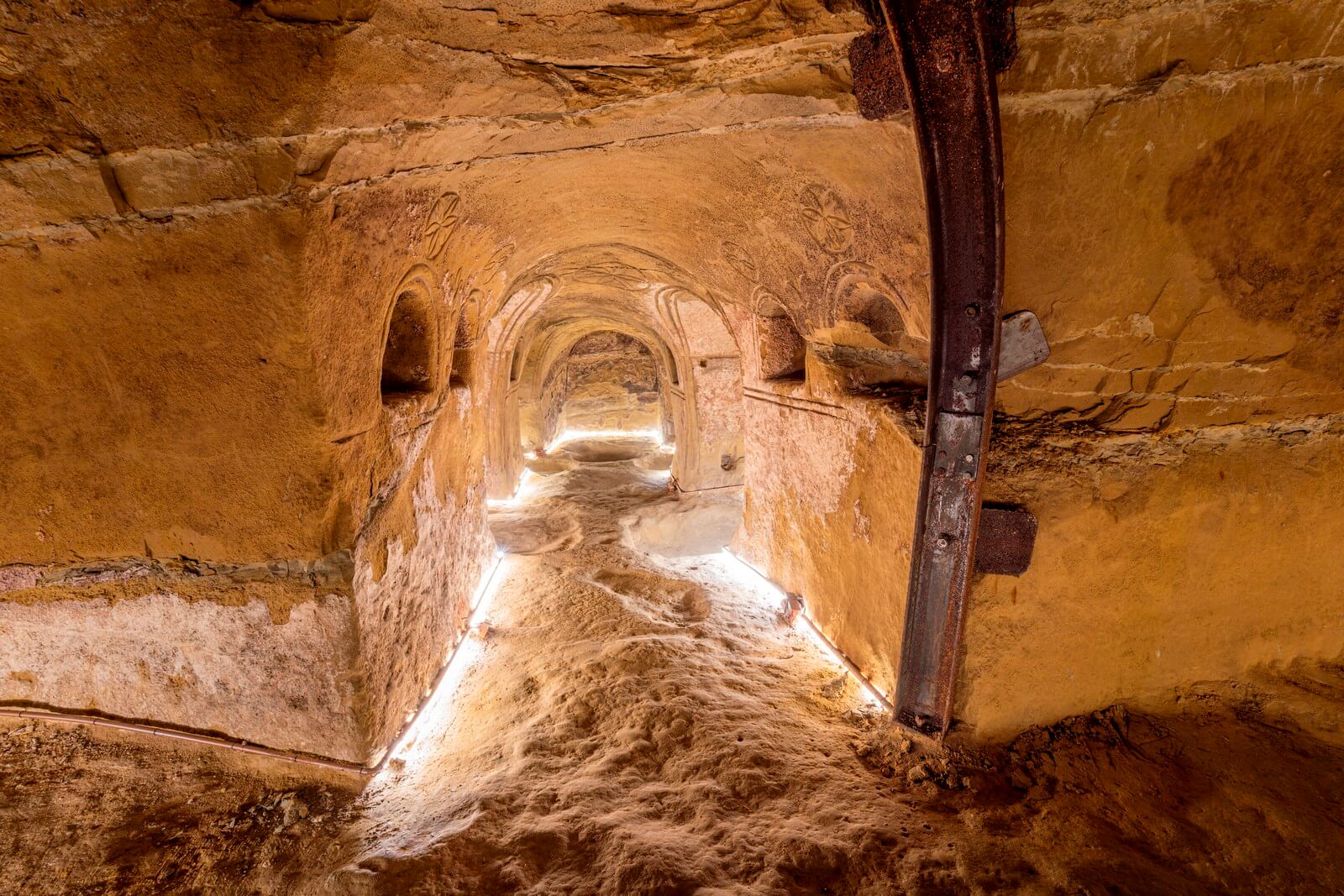

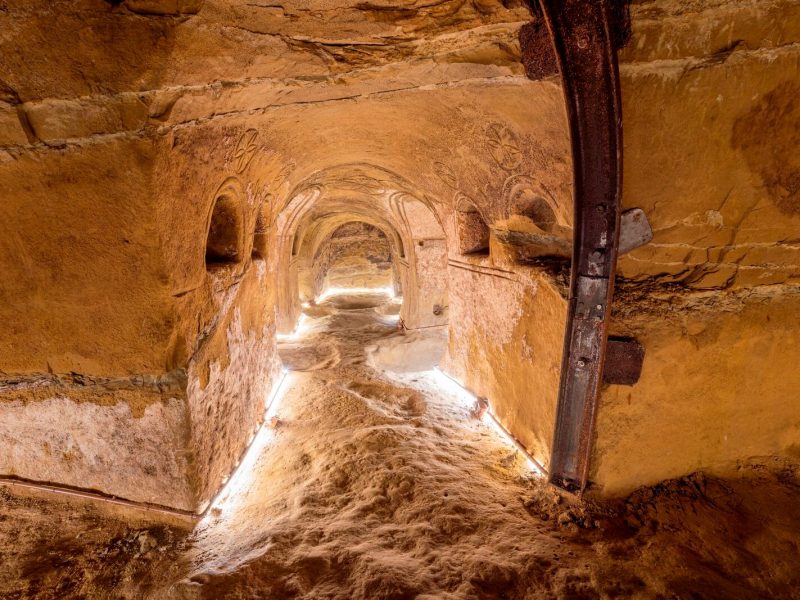
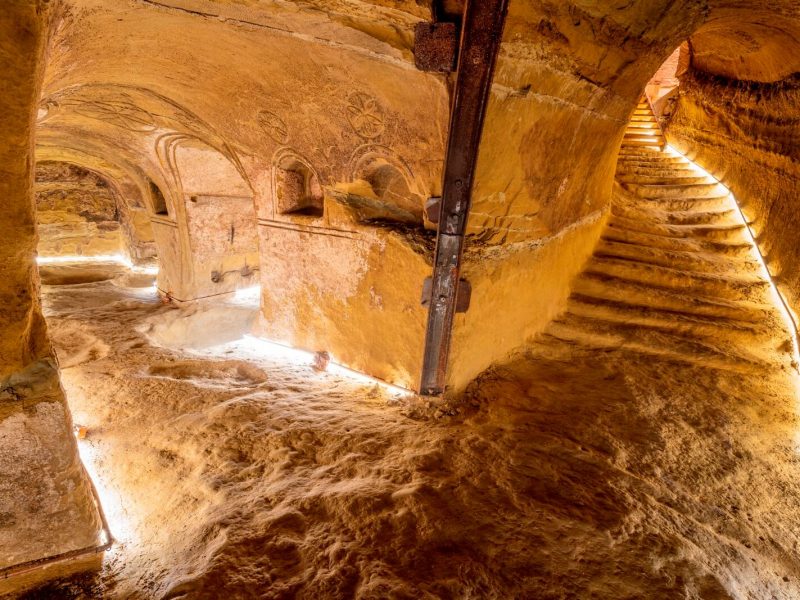
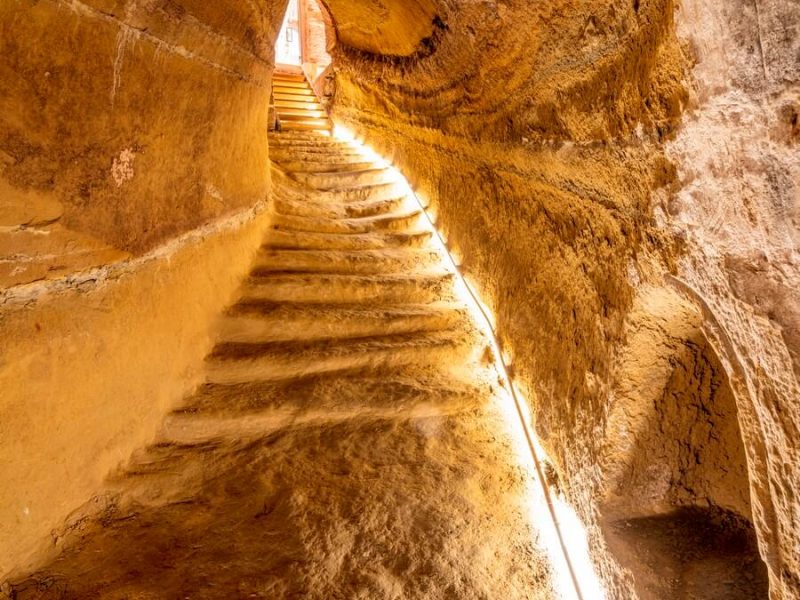
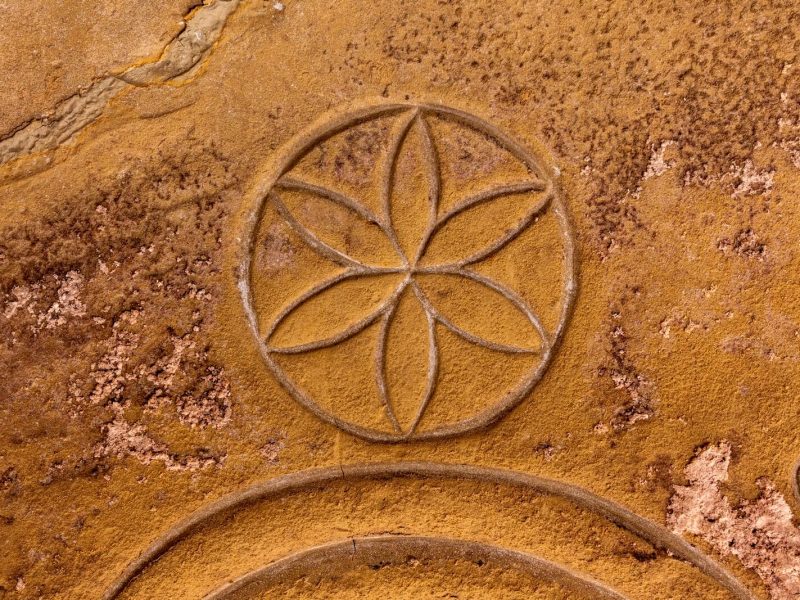
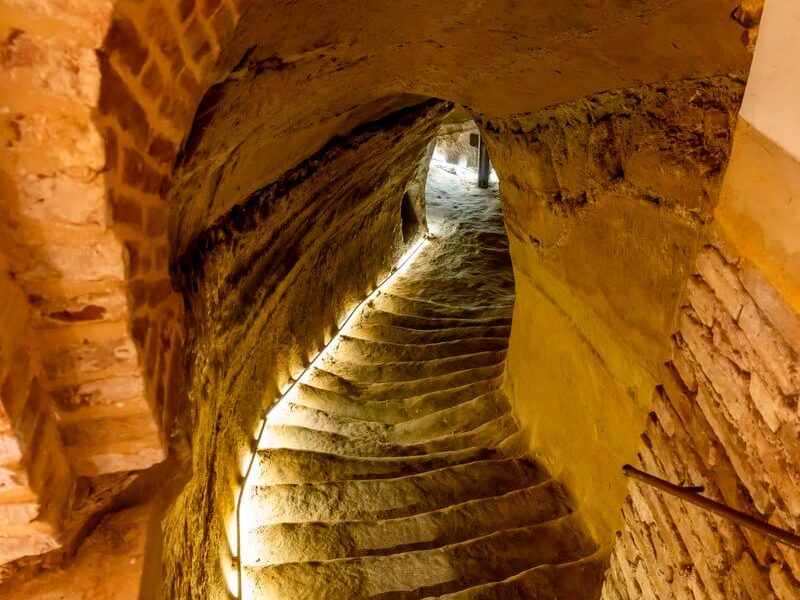
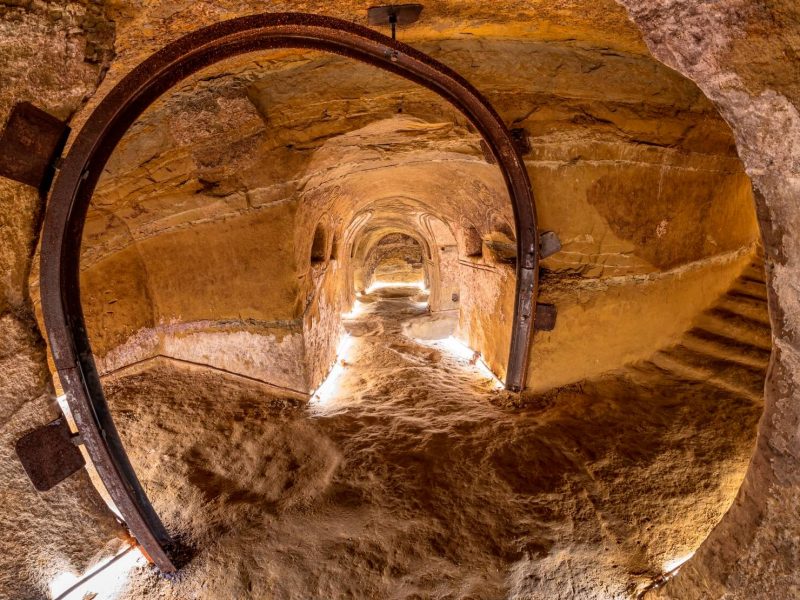
A few steps off the city walls of Piagge, a door leads to a little, mysterious underground world. Tuff steps worn out by time lead down the Hypogeum of Piagge, an underground place dug both in the earth and in history. The cave was discovered as a result of an historical research started in 1996 by architect Gabriele Polverari. It is a breathtaking and suggestive place, unique of its kind, appealing to visitors and scholars from around the world. It only takes a glimpse to catch one of the main characteristics of the Hypogeum: the main corridor is crossed by horizontal intersections that make the visitor feel like he is in the central nave of an underground church. This space has indeed a cruciform design, a choice that cannot be accidental and legitimates the hypothesis that it had a religious function and was probably created when Christianity was still treated as a mean religion and its followers were persecuted. Further to the basilica-like structure, another element supporting the religious use of the place is the presence of very ancient symbols connected to the primeval Christianity but still contaminated with pagan icons. Both the walls and the vault, in fact, are decorated with various and mysterious graffiti, the most recurrent of which is the so-called flower of life, a stylized and symmetric six petals flower already used in pre-Christian times.
A clear Christian origin have instead the crosses, of several sizes, recognizable in many points of the cave while the floral symbol, probably a lily, is more difficult to interpret. Its stylised shape looks like spreading from three hills that are carved between the niches, dug in the walls, where lamps were placed. The Hypogeum holds many other mysteries, doubts and hypotheses which add to its magic and promise that new discoveries will be made in the future.

Piagge