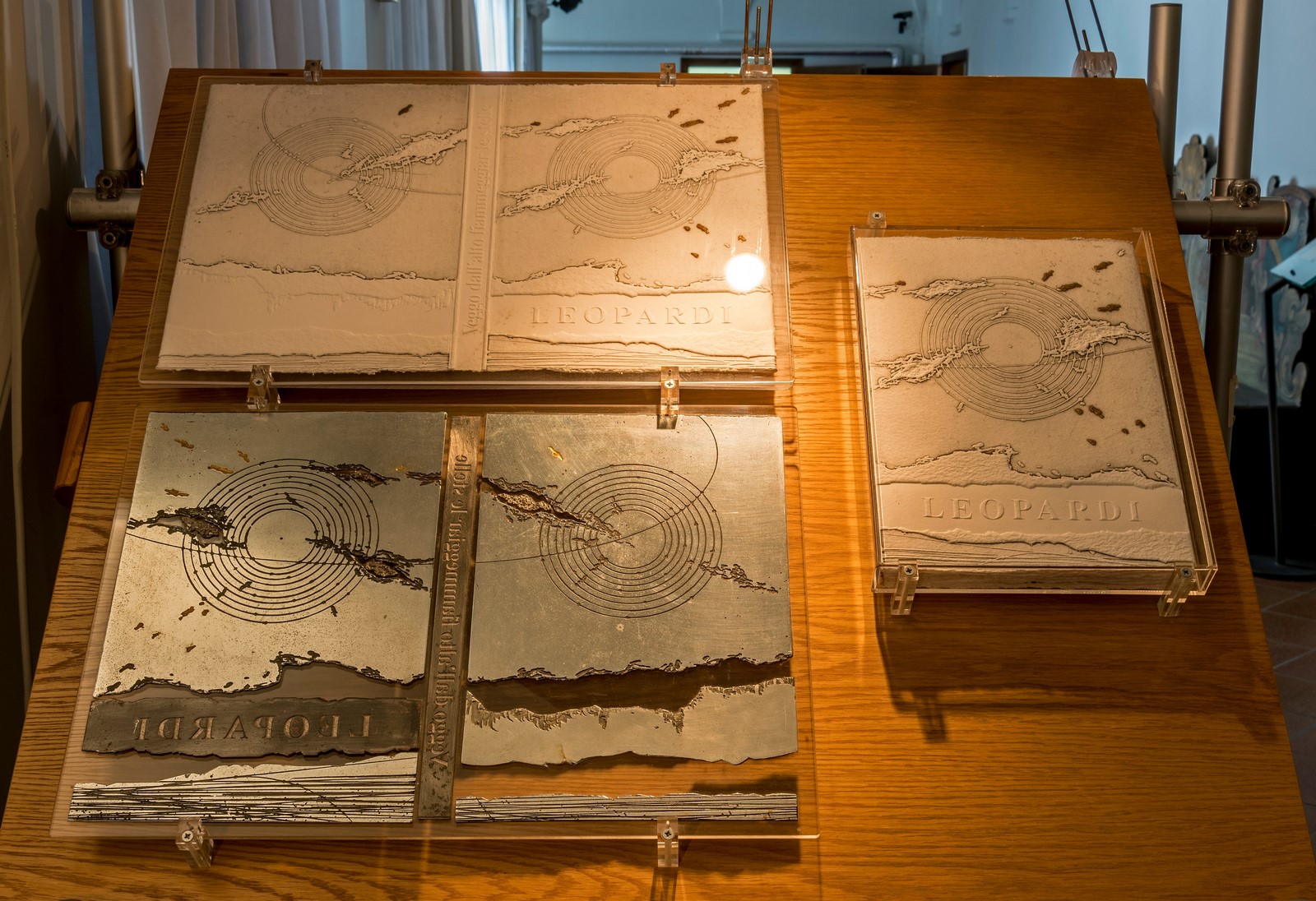

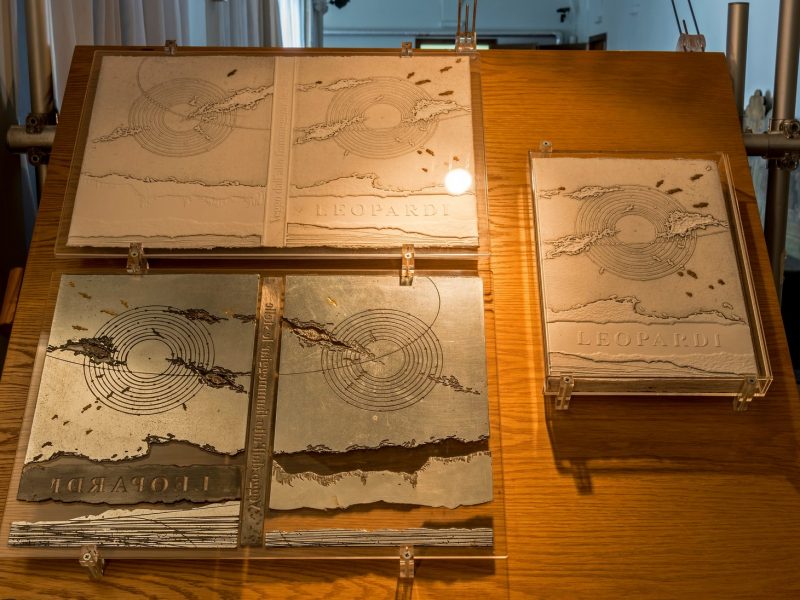
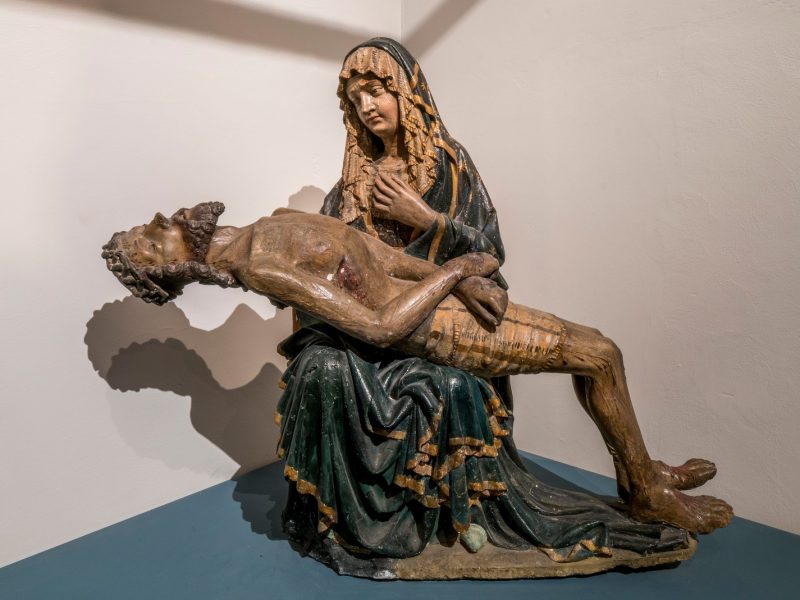
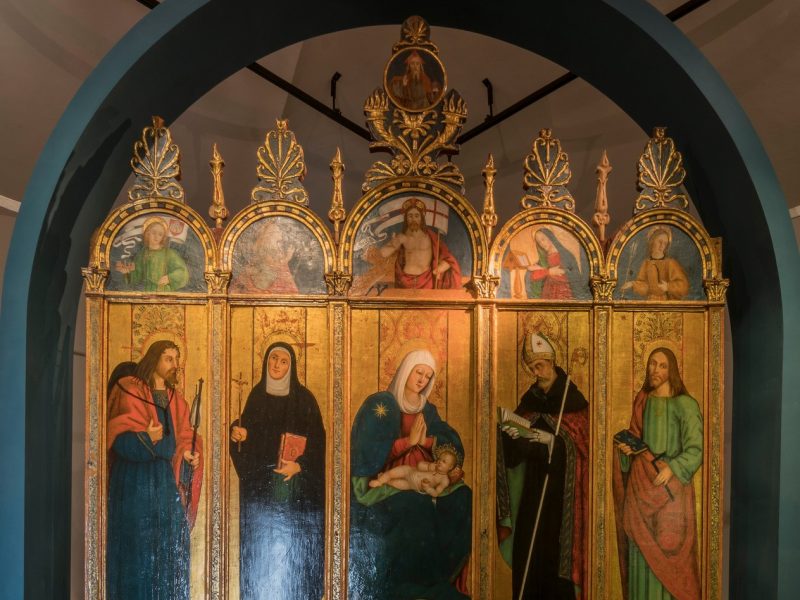
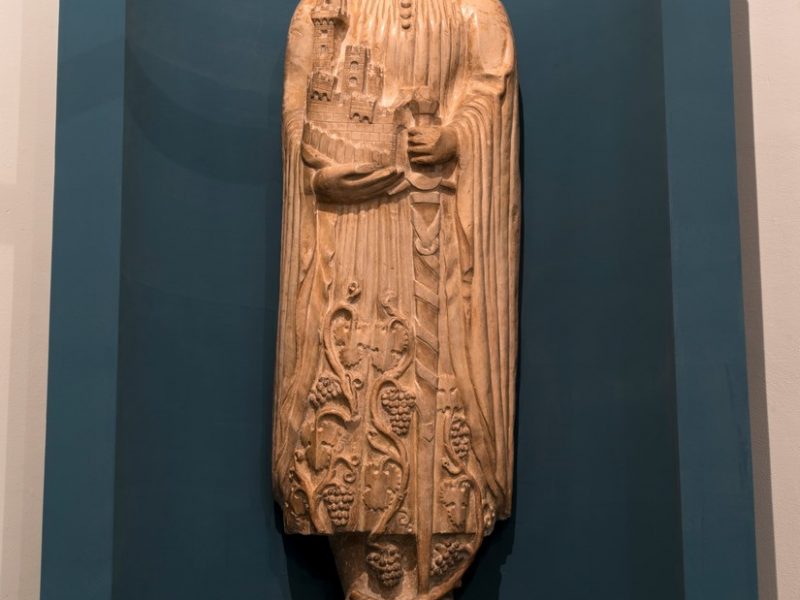
Pergola is a treasure chest that charms the spirits and amazes the eyes. Some of its jewels can be seen in the Museum of Gilded Bronzes and of the City of Pergola. Here, in the Modern Art section, visitors can admire the precious graphic works by the local artist Walter Valentini who reproduced on cotton paper Giacomo Leopardi’s timeless works to celebrate the second centennial of his birth: so refined a work as to make those limited edition volumes a real jewel. In the historical-artistic section, a special mention deserve the statue of St. Secondo, the city’s patron, who holds in his hands a small reproduction of Pergola, and the fine Pietà of St. Augustine, one of the most touching in Central Italy, in which the Madonna’s suffering is not represented and yet can be perceived by the observer’s eyes. The most remarkable work is certainly the Polyptych of St. James with Bishop St. Augustine, because of its lively colours and its history, as the paintings were stolen by Napoleon from St. James’ and St. Lucy’s and brought to Milan. The Museum includes also a numismatic section, with 240 coins forged precisely in the city mint.
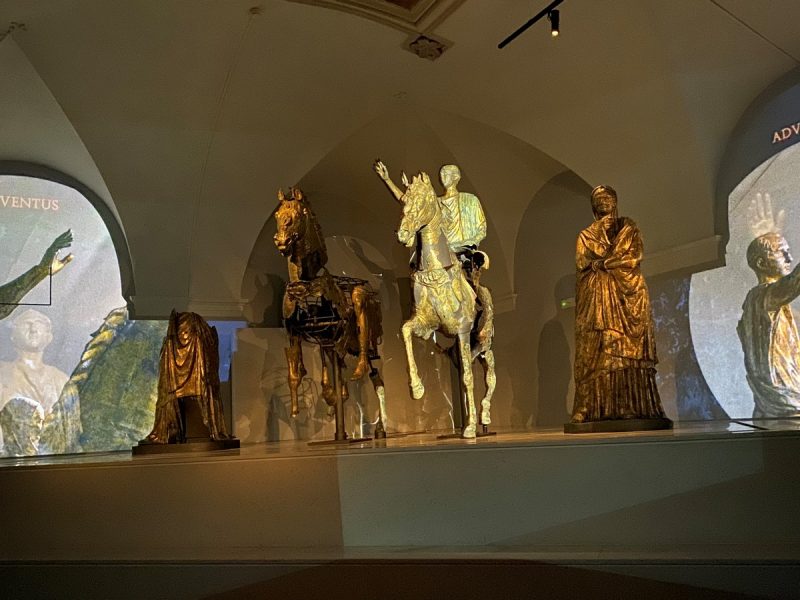
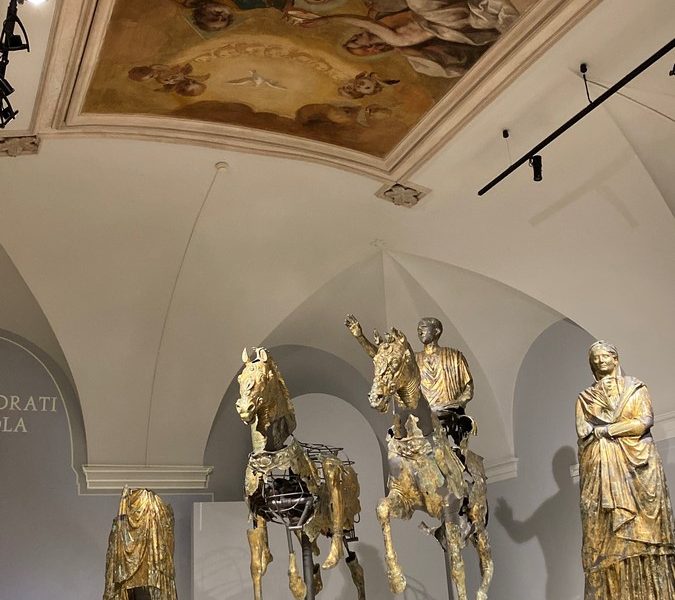
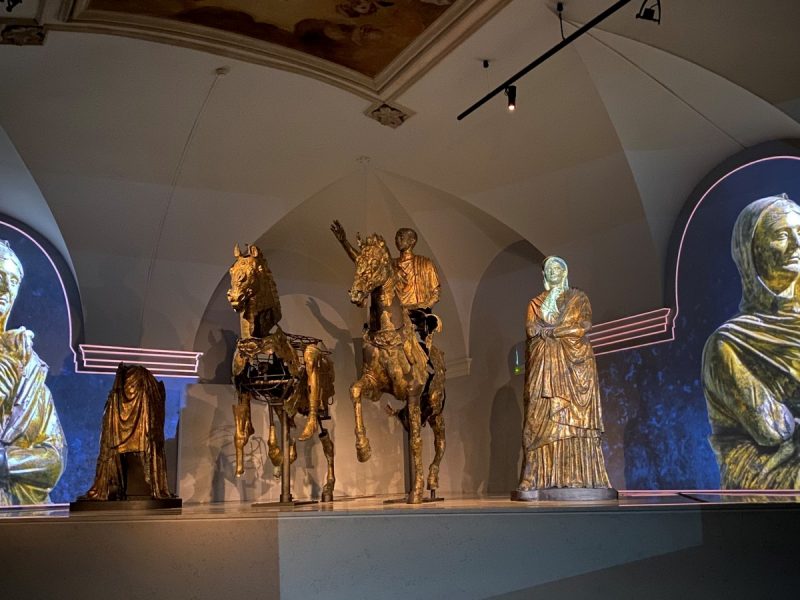
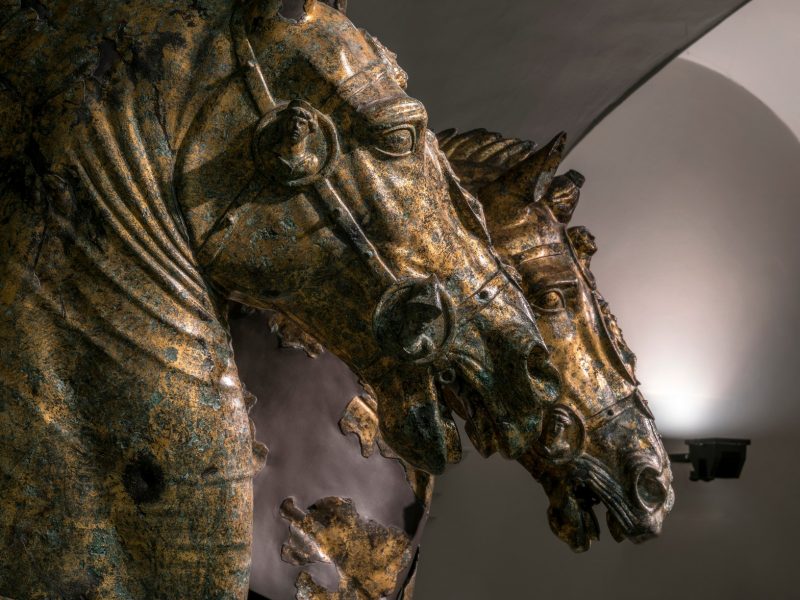
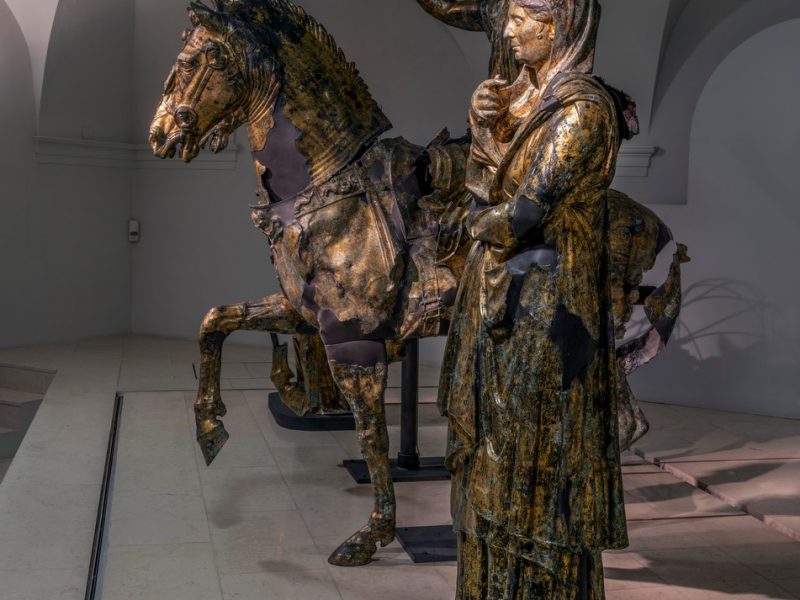
But Pergola’s most precious treasure, which makes the city worldwide famous, is kept in the archaeological section of the Museum, which can boast the presence of the only Roman gold plated bronze group existing in the world: the Gold Plated Bronzes from Cartoceto di Pergola. Found in 1946 in a hole hardly deeper than one meter, and five in width, the Bronzes consisted of 900 kilograms of gold-plated fragments. After a careful reconstruction, the statues composing the group were reassembled. They consist of two women (the complete one is almost 2 metres tall) and two knights in a military attire riding their luxuriously harnessed steeds. Several suggestive hypotheses exist about the identity of the statues (one tells about members of emperor Tiberius’ family, of the Julian-Claudian dynasty, 1st Century AD) and the reason why they were destroyed: according to some, the bronzes were stolen (metal was then most precious) by thieves who were identified and had hastily to destroy and bury the bronzes. According to another, less likely theory, the members of the family, because of a crime they committed, underwent a damnation memoriae (erasion of memory), and according to the Roman procedure their images were destroyed to remove all signs of their existence. In spring 2019 a very suggestive immersive hall has been created, really deserving a visit.

Pergola