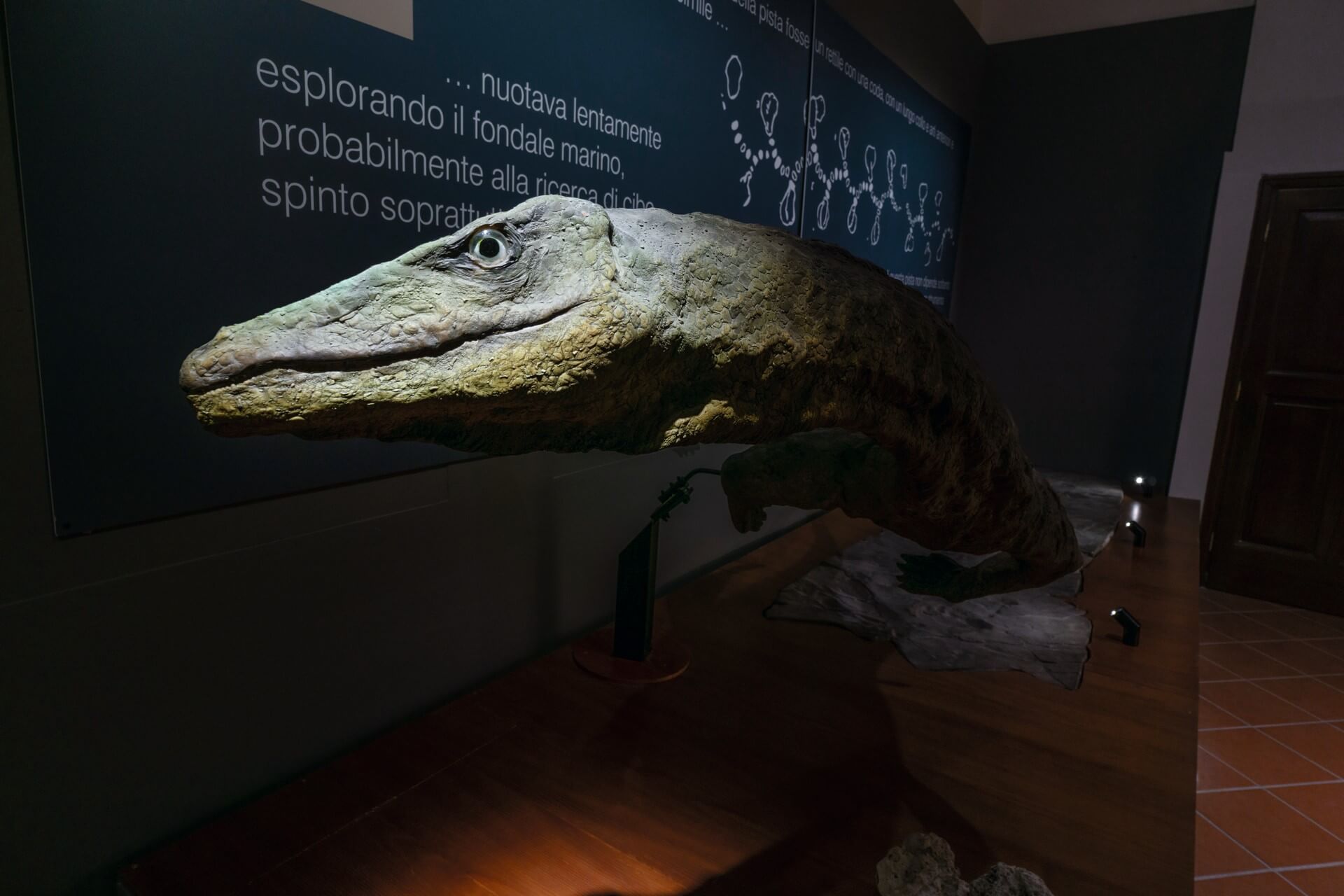

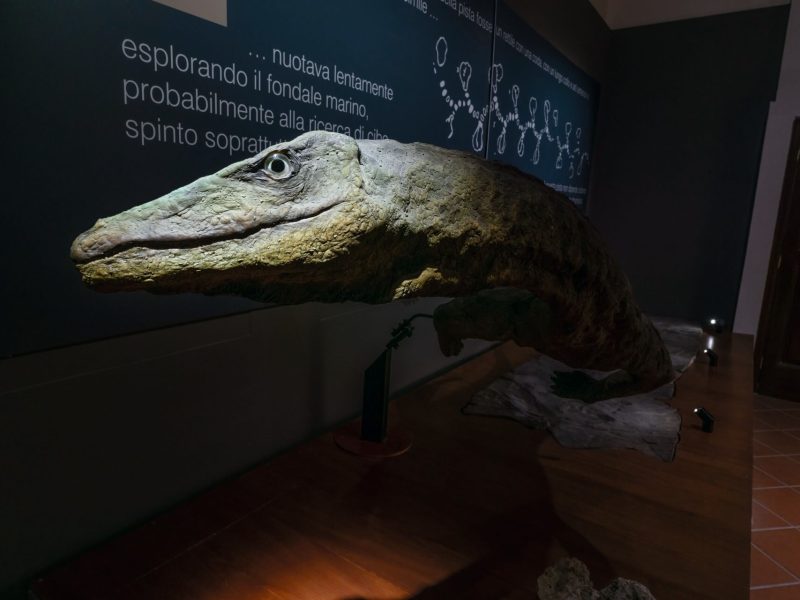
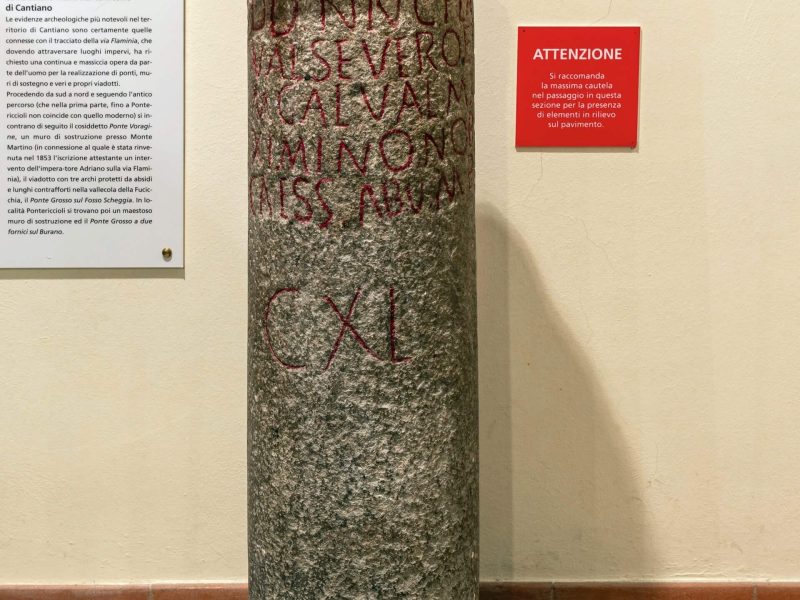
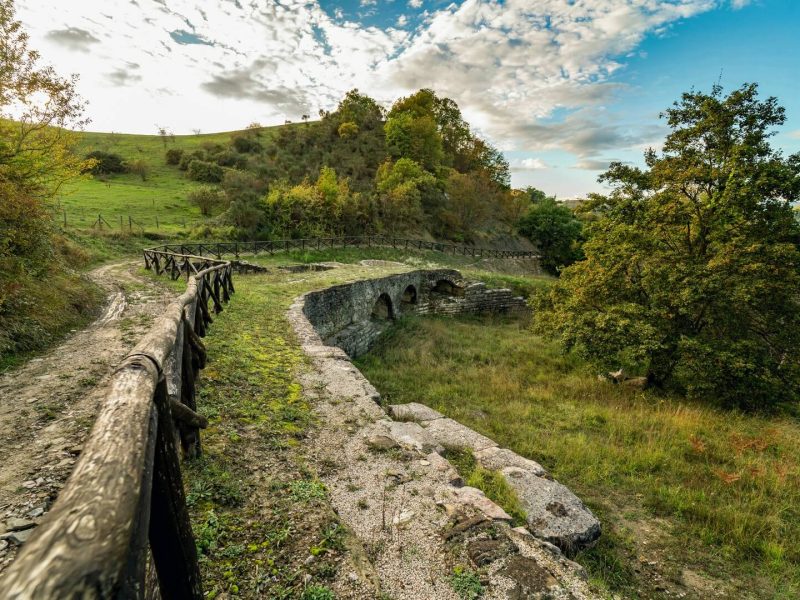
In the halls of the former St. Augustin’s Convent we find the “G. C. Corsi” Archaeological and Flaminia Road Museum. The place makes us dive into the ancient history of Candiano. The first section is geo-paleontological and, it can really be said, it brings back to the surface Cantiano’s prehistory, when instead of hills and mountains here there was an enormous coral archipelago. Its protagonist is “Ugo”, a big amphibious reptile who lived before the dinosaurs, whose features were recreated based on prints fund at the feet of mount Catria. After prehistory, there comes the history of the first human settlement, told by the archaeological section of the museum. Its most important pieces are a milestone from the Flaminia Road, a forerunner of today’s street signs marking the perfectly calculated distance from Rome, and the “Bronzetto” (Little Bronze), a little and almost oracular statue, whose features show Cantiano’s unicity. The Piceno shape of the helmet, the unmistakably Etruscan lineaments of the face and the strong body, typical of Umbrian bronzes, show that Candiano was always a border land, a crossroad to Etruria and Piceno, Marche and Umbria. Plenty of other findings are on show: fibulae, pots, pliers, fragments of mirrors, arrow tips, coins. “Poor” objects bearing a rich witness to the everyday life of Roman settlers, who came here to rest after the hardships of war, and of the following historical time, marked by sieges and hard battles. The importance Cantiano gained after the Flaminia Road, of which it was a vital junction, was built in 220 b.C., is further and spectacularly shown in the Pontericcioli Archaeological Area. Formidable stone giants rise inside an area never touched by human intrusiveness. We can walk carelessly, accompanied by the chirps of a magpie or by the peaceful ruminating of some grazing animals, and admire an enormous supporting wall made with “grigna”, a grey, typical local stone, and the Ponte Grosso (Big Bridge), the three arched Bridge and the ruins of Voragine Bridge, all hinting at the building splendour of ancient Rome.


Cantiano