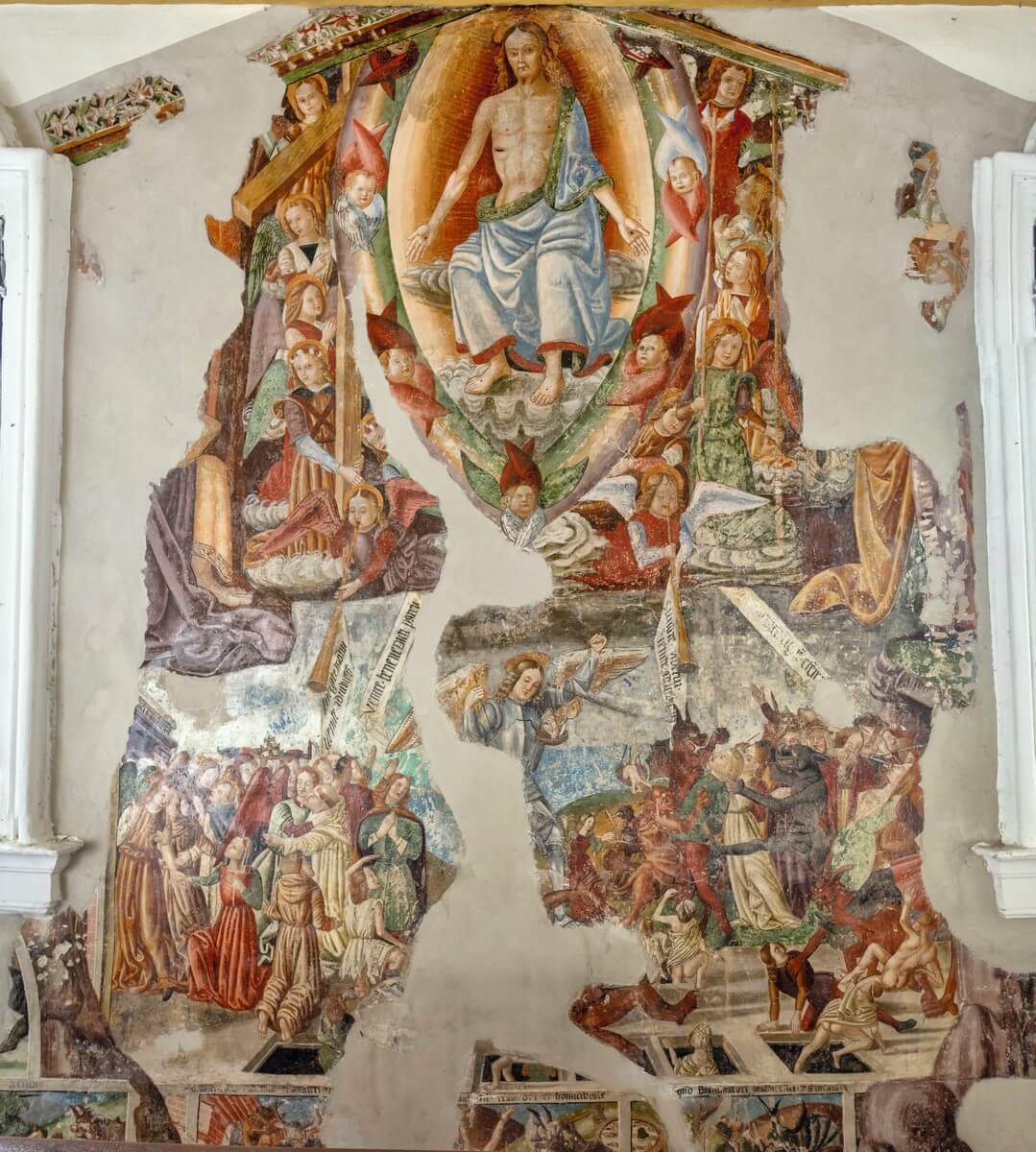

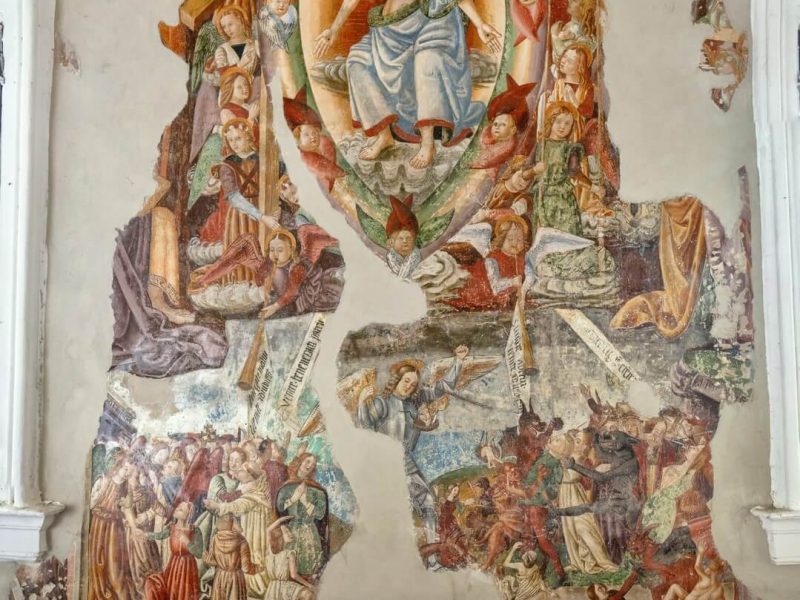
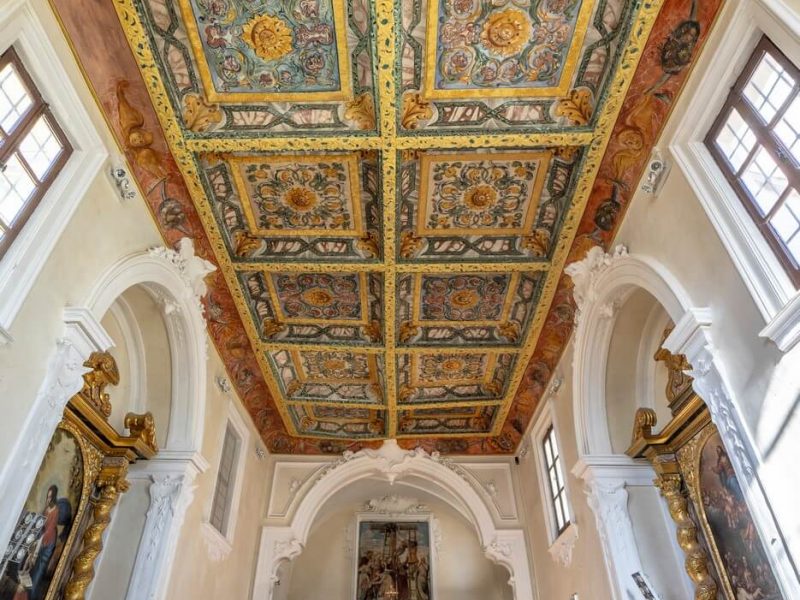
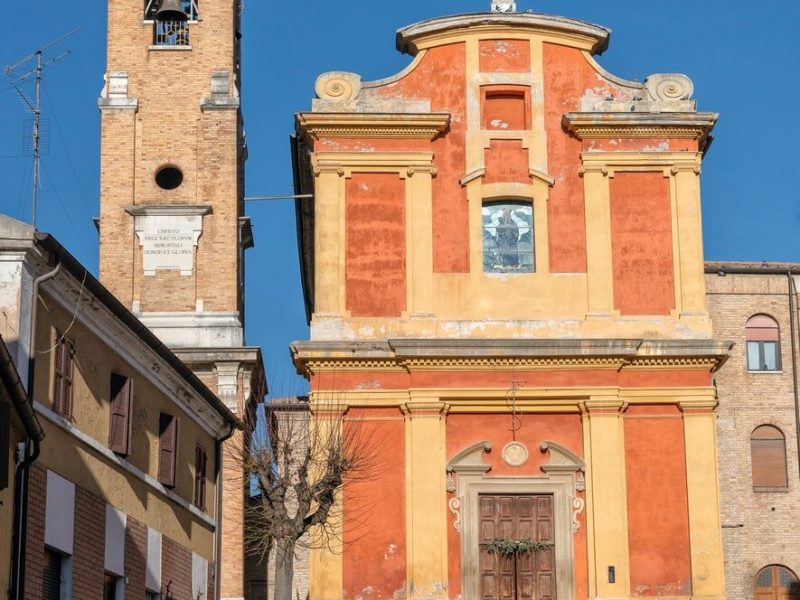
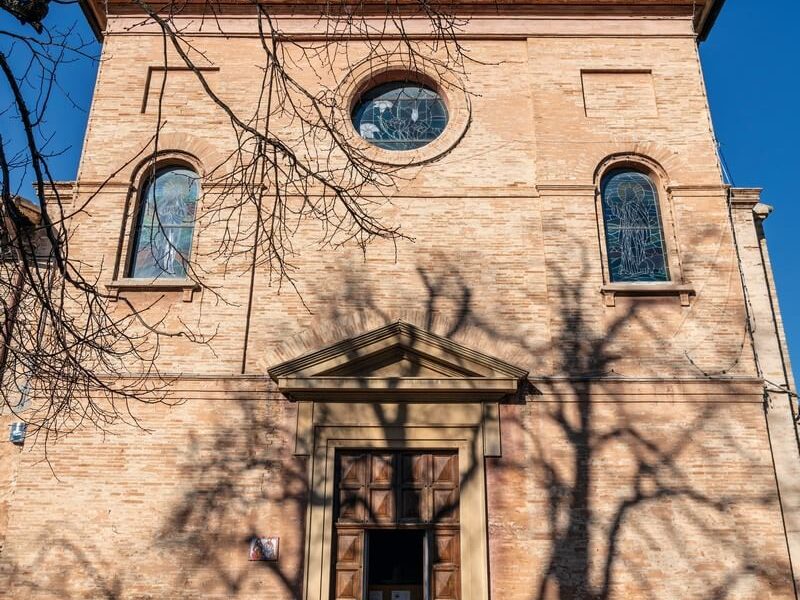
The ancient boroughs, the historical heart of Colli al Metauro, are characterized by a strong religious tradition, which developed in centuries into the construction of a many churches, rich with history and unexpected works of art. Saltara alone boasted the definition of “City with one hundred churches”, but the other boroughs were not inferior. Precisely in Saltara there is one of the most fascinating structures: the Chiesa del Gonfalone (Church of the Emblem), the buttonhole flower of the village, It was reopened in 2014 after a careful restoration, which brought back to light, above the entrance, a Doomsday fresco that depicts with a strong evocative taste the weighting of souls which at the end of time shall decide for their safety or damnation. There are also a beautiful painting from the school of Perugino, the Deposition from the Cross, and ceiling coffers bearing hand painted plasters. Inside the church, coming from an ancient Roman mansion. Between the other churches in Saltara, the attention of visitors is caught by the imposing orange façade of St. Peter Celestino’s which catches the eyes of visitors as they arrive, and Bellinzoni’s fresco in the Chiesa della Fonte (Church of the fountain), which makes the observer feel like he’s joining a renaissance court.
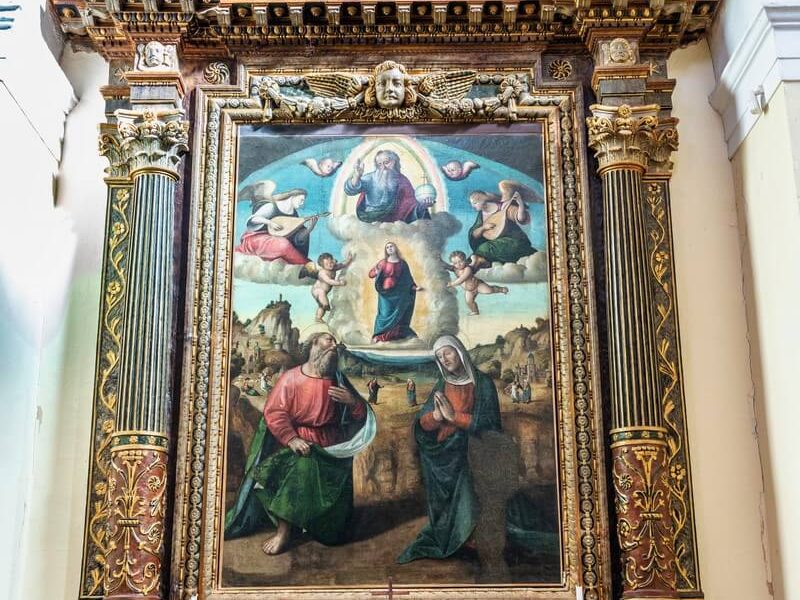
In nearby Serrungarina is instead remarkable St. Anthony Abbot’s parish church, which hosts fine works by two local artists: a painting by Presutti, from Fano, and one by Guerrieri, from Fossombrone, respectively representing “the Immaculate Conception” and “the Visitation”. But churches rise outside the walls too, such as the XVI century St. Apollonia’s in the centre of the charming borough of Bargni. In the main square of Montemaggiore, the imposing church of Santa Maria del Soccorso (St. Mary of Rescue), dating back to the XV century, hosts an interesting baroque “Last Supper”.

Saltara