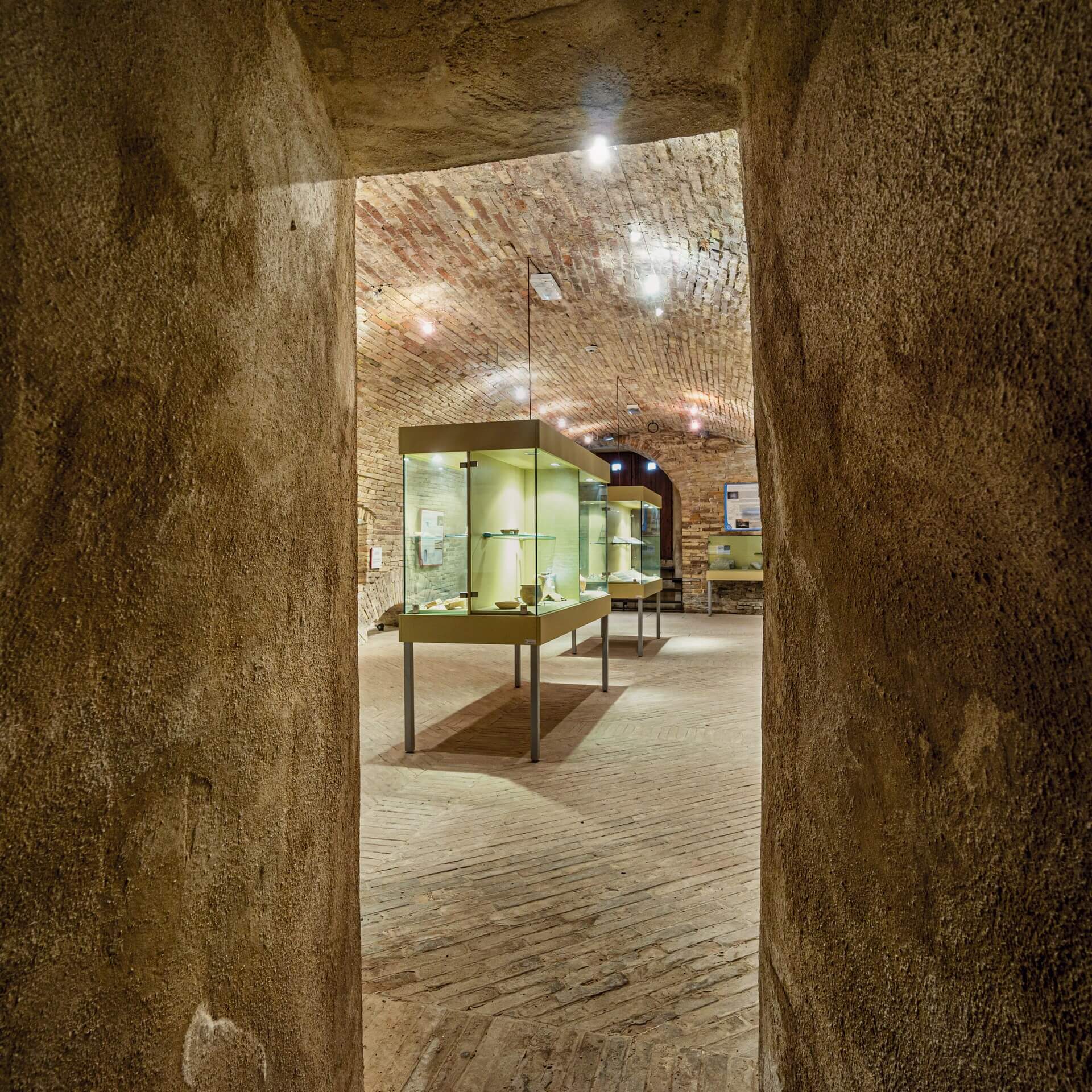

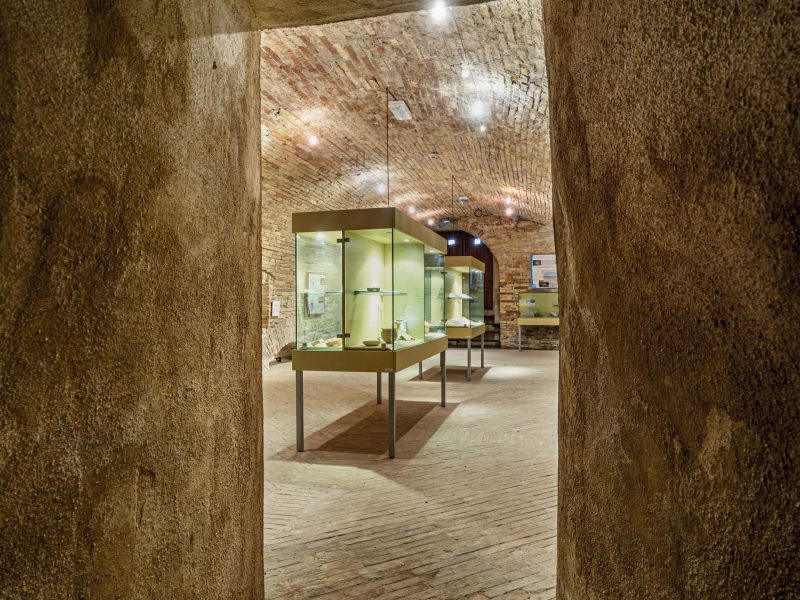
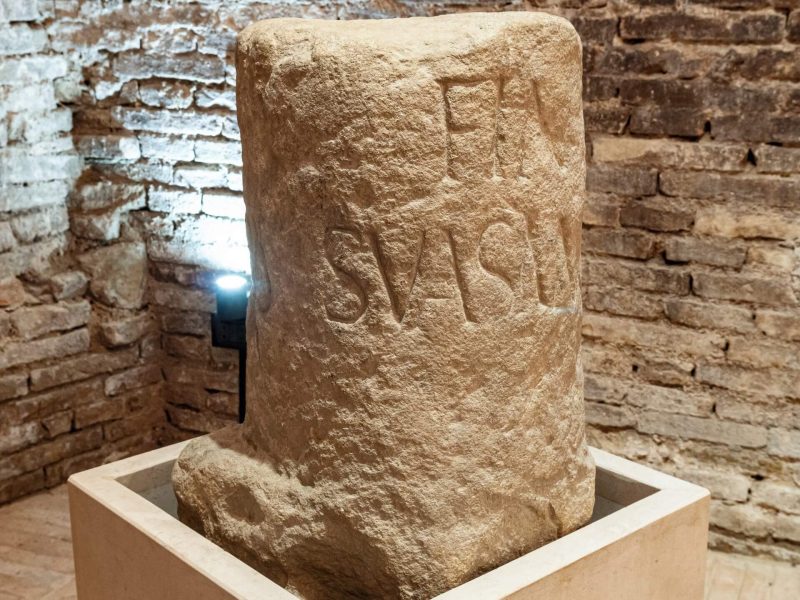
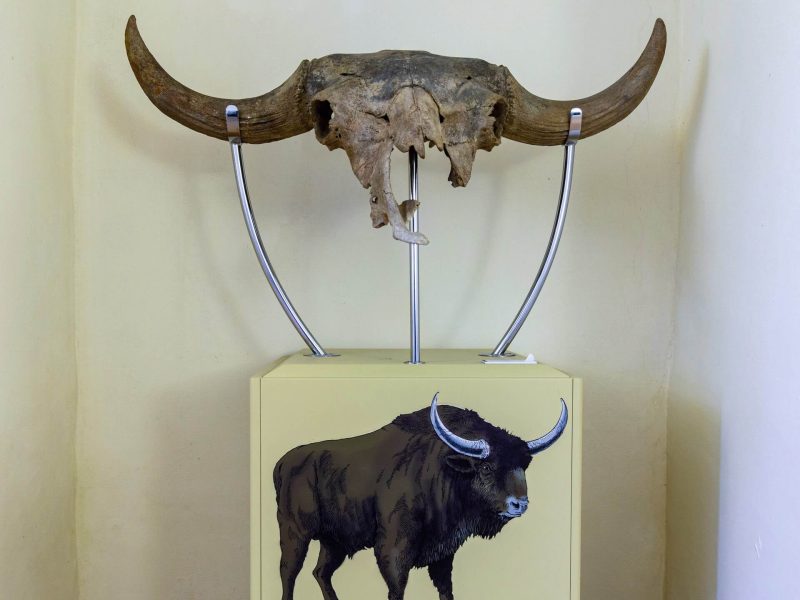
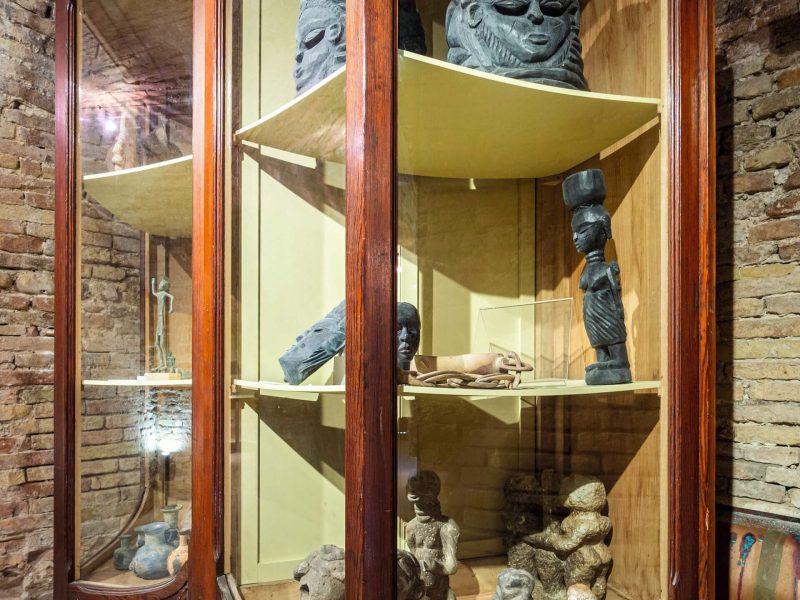
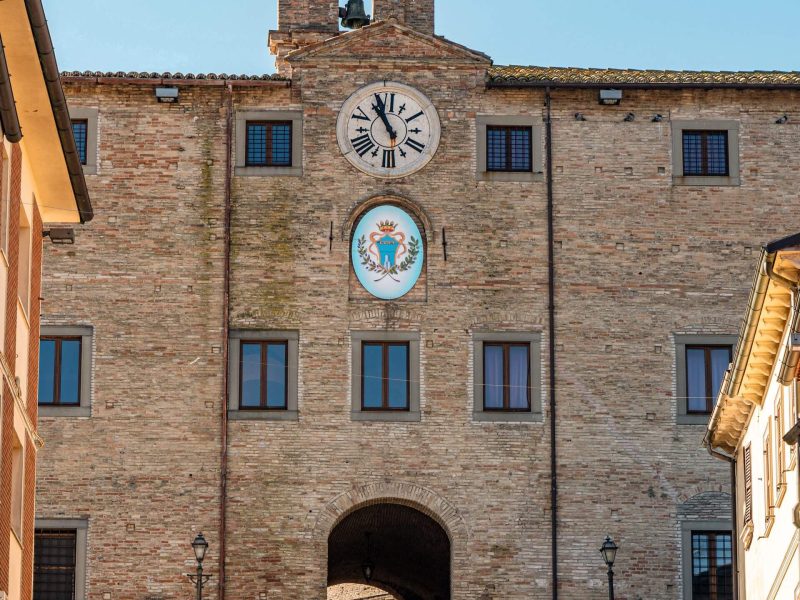
One walks a few steps down into the cellars of Palazzo della Rovere, and travels millions of years back in time. The basement of the Palace hosts the Archaeological Museum of the Territory, aimed at telling the geographic, historical and cultural history of the Cesano Valley by means of five halls set up on two floors and equipped with richly illustrated explanatory panels. The tour begins from the most remote prehistory, when ammonites, most ancient molluscs, lived on sea beds which in time were to rise and become solid ground; a ground where would later walk such unexpected animals as rhinoceroses and buffalos, and an enormous horned buffalo skull can be admired in the museum. Further ahead, in the cases appear the unmistakable signs of the presence of man, whose evolution is shown by findings that show the human advancement in dealing with materials: after flint objects there are copper, then bronze and iron ones: brooches, bracelets, fragments of weapons and many amphorae. Down on the lower ground one meets a crucial stage in the history of San Lorenzo in Campo: the arrival of the Romans which occurred in the III century b.C. Amid the many findings, especially charming are many votive little female statues, probably connected to domestic cults. Very interesting is also the boundary stone which marked the border between the territories of Pesaro and of the great Roman city of Suasa, close to San Lorenzo. The last hall brings one back to the origins of the museum, as it holds the collection created by Gello Giorgi, a doctor and a monk who created its early nucleus. During his travels, Giorgi collected in fact a lot of objects, very heterogeneous both in age and origin. One is moved especially by the findings the monk brought back from Sierra Leone, where he was a missionary for a long time: most original handicrafts which enable visitors to understand the African ethnology.

San Lorenzo in Campo