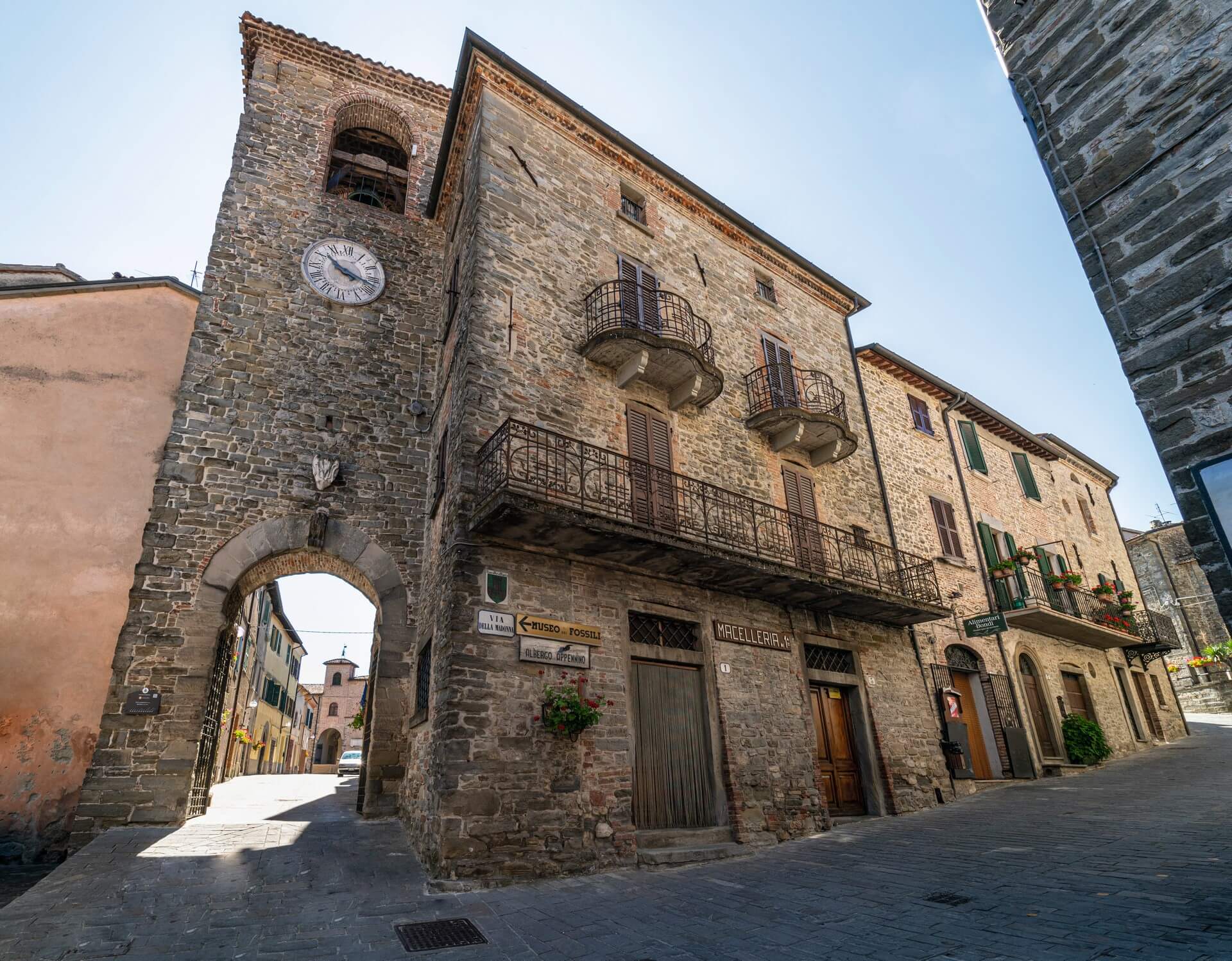

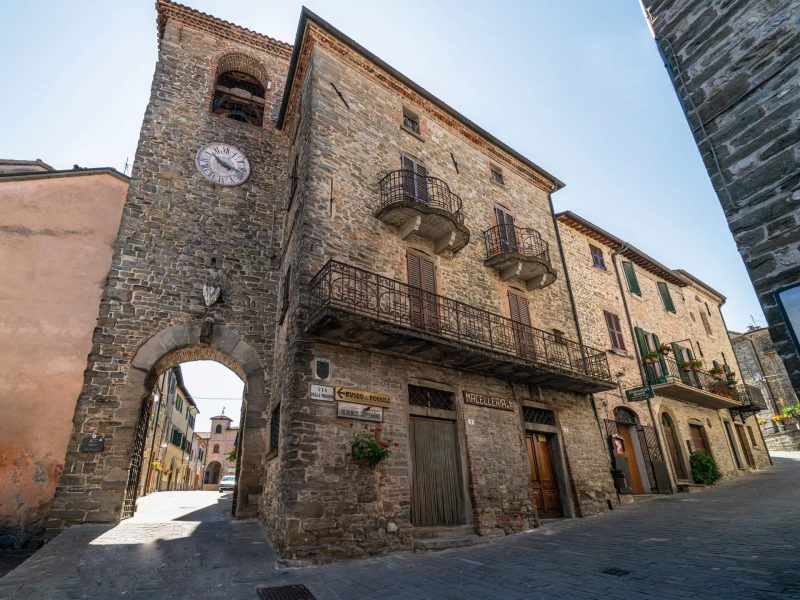
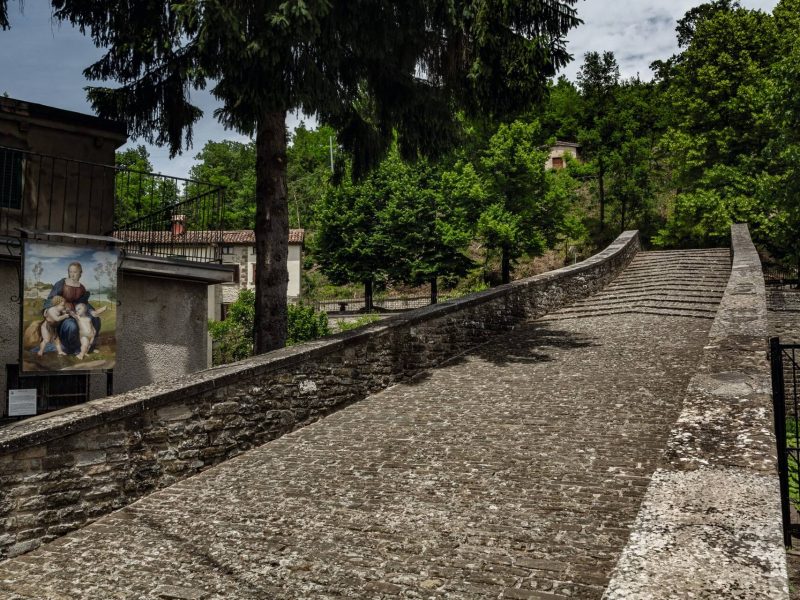
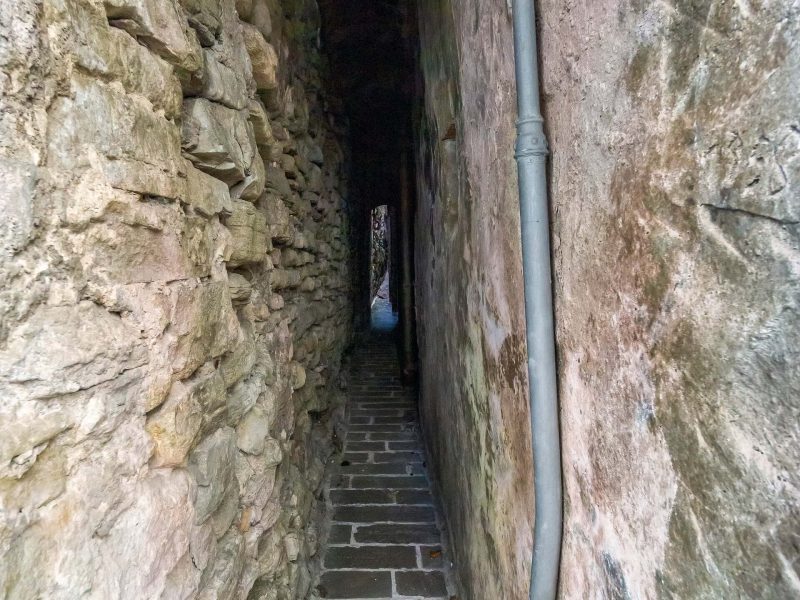
Apecchio is inexhaustible. While exploring it, we realize that there is no break in the interesting things we can admire. How can one not be pleased, at the arrival, while crossing the Biscuvio river on the “donkey back” bridge, a typical medieval work represented here in a most picturesque way? They say that the impression of serenity evoked by this corner inspired Raphael when he painted his Madonna with a Goldfinch, on whose background there is a bridge whose shape matches the Apecchio one. In the city centre houses, alleys and palaces open like books and tell the town’s history. We find the synagogue, the oven and the court where they celebrated Sukkot, the holiday of the tabernacles, and do so learn about the story of the Jew community that lived here since the end of the XV century. The Vicoletto (narrow alley) not more than 42 centimetres wide, which makes it one of the narrowest in Italy, is a memory of the smart way the Jews found to evade a heavy tax the
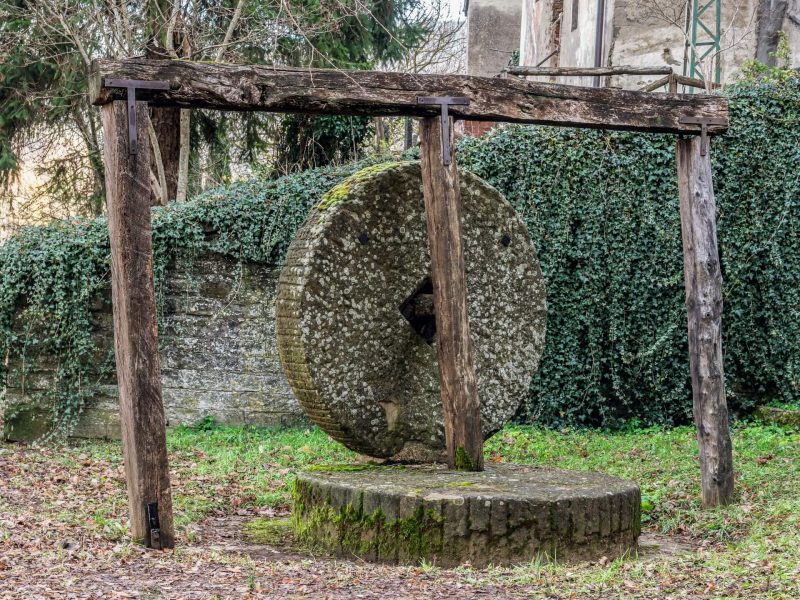
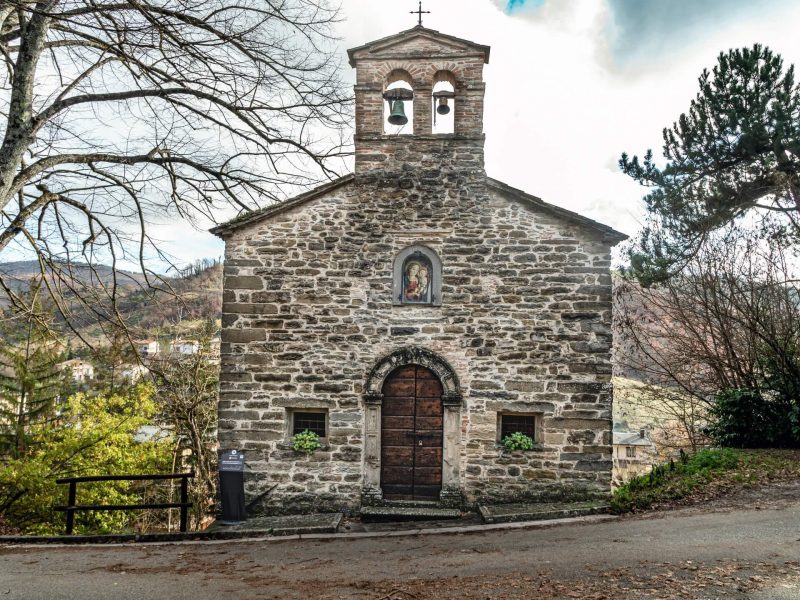
Church imposed upon those of them who built theirs connected to the house of a Christian. The patrimony is also enriched by the churches spread into the heart of Apecchio. Near Palazzo Ubaldini stands out the St. Crucifix’ sanctuary, previously known as St. Martin’s parish church, that according to some theories was built on the location of a temple dedicated to the god Mars. Inside it there is a work most loved by people of Apecchio: the wooden Crucifix which, according to the tradition, protected them from the disastrous earthquake of 1781. A mention deserve also the precious works of art in Madonna of Life’s, the mysterious templar symbols on the fresco shreds in St. Lucy’s and the charming St. Cathrine of Alexandria’s, protected by the shadows of a long boulevard. In the city outskirts, stands out an enormous millstone once used to grind dyer’s woad, a grass used to produce indigo, a colour precious for dying tissues and creating paintings that for centuries was a source of wealth to Apecchio.

Apecchio