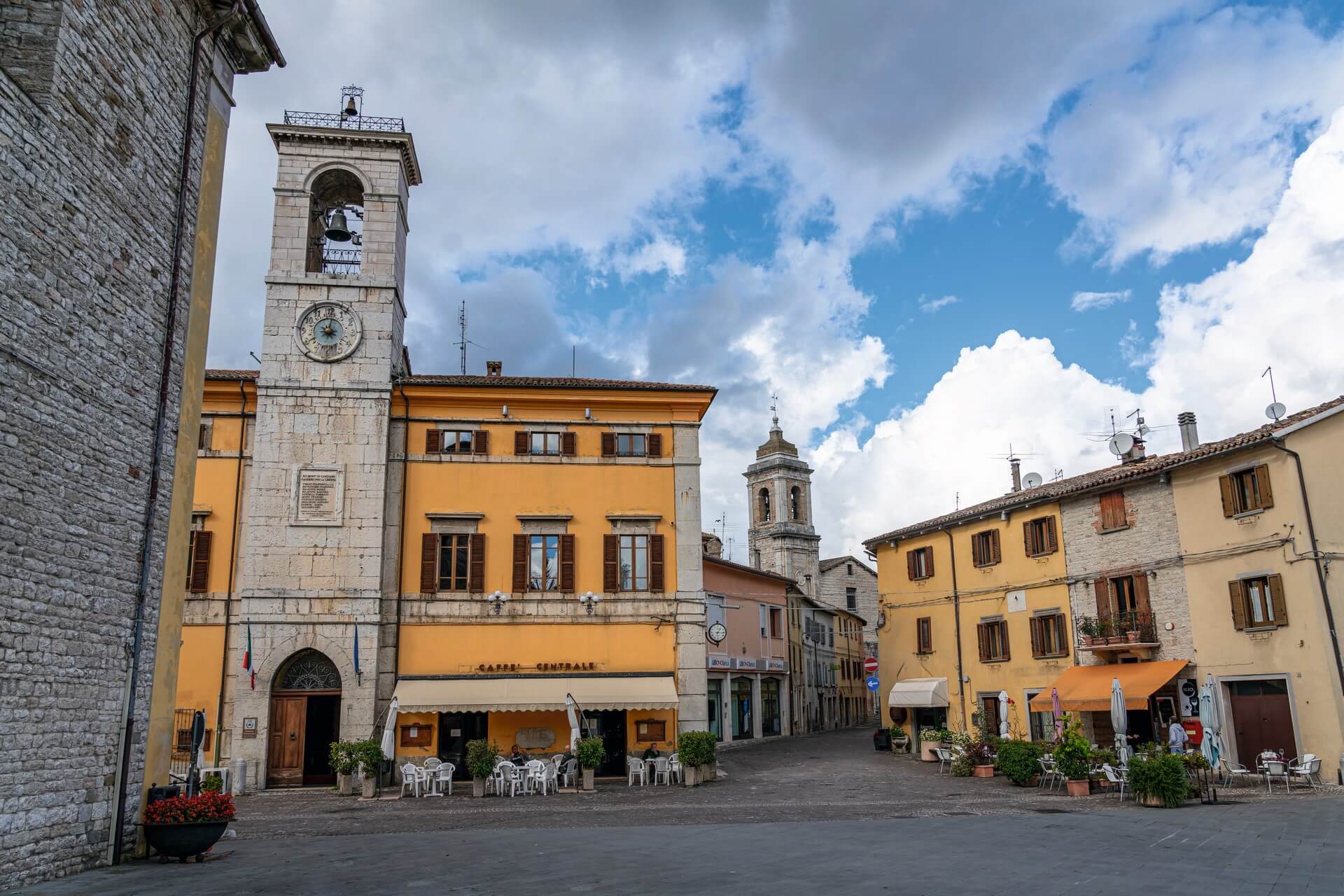

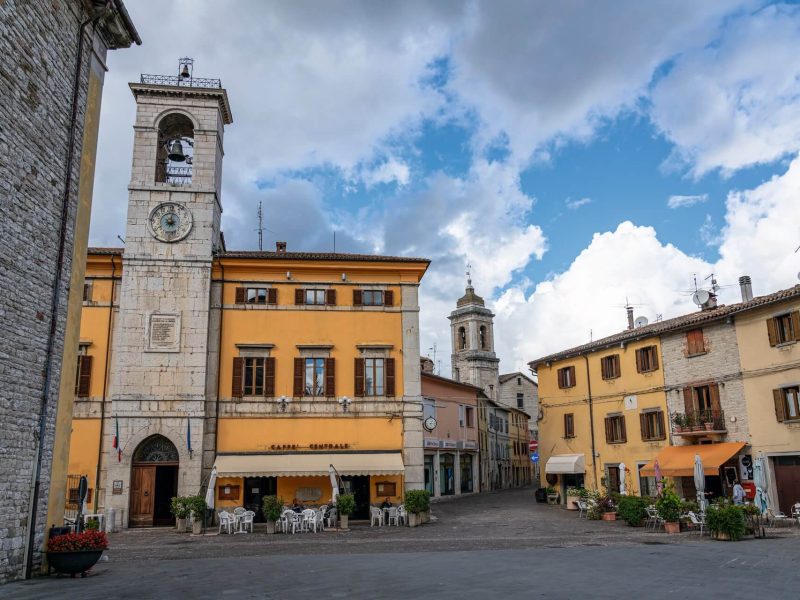
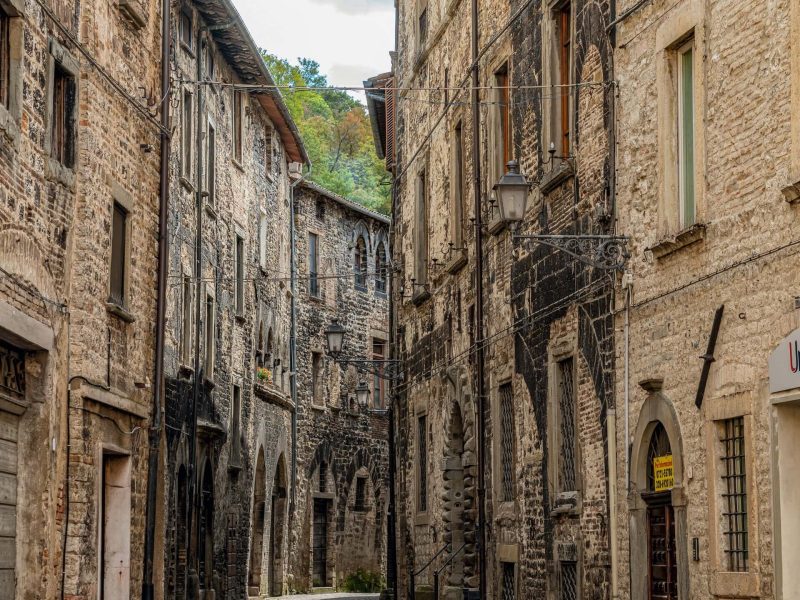
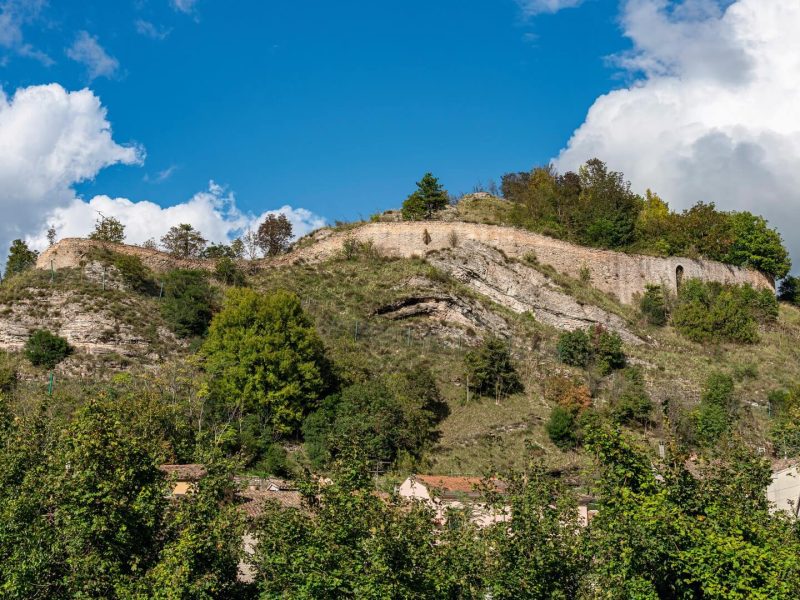
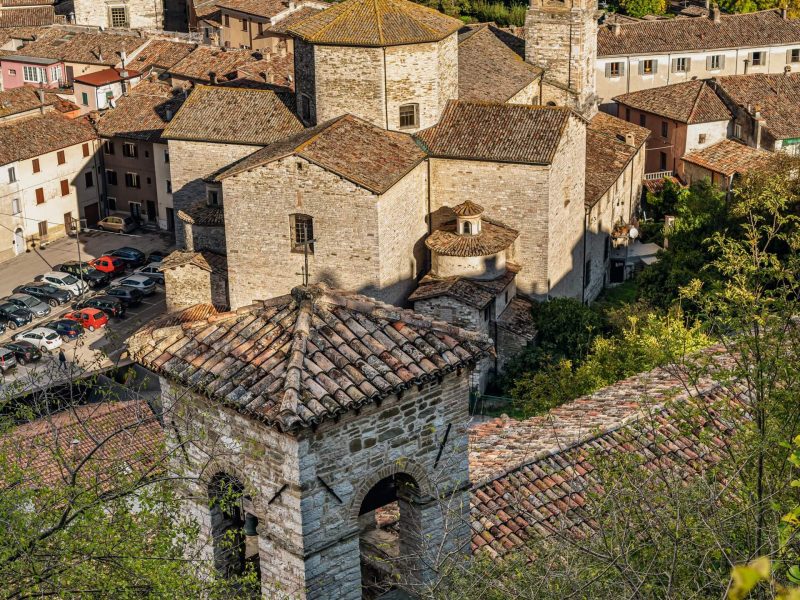
Few other places offer, as Cantiano does, a chance of living, not just studying history. Identity and origin of this community are not kept into the pages of archives only: they are also indelibly cut on stones and on what men built using them. Just a few steps away from Luceoli Square, which keeps the name of an Umbro-Roman settlement, rise two ancient fortresses which mark a basic moment in the rise of Cantiano after the Roman age and the troubled first centuries of Middle Ages. It is indeed around the year 1000 that were built the Calmarano and St. Ubaldo fortresses, whose important ruins still show their ancient splendour; and this is where settled down Cante Gabrielli, the lord after whom was named the new-born city, which became the impregnable guardian to the Flaminia road. Stones into the City centre talk to us: the white carnelian upholstering the Clock Tower and the façade of the city hall, as well as many residences, comes from the nearby Burano Canyon. Its whiteness is contrasted by the sooty façades of the buildings in Augusto Fiorucci Street, darkened by the smoke they once used in attempts to purify the air during awful times of plague. Still, Cantiano was famous because of far more sophisticated means to fight epidemies, including a supposedly miraculous balm. It was to give thanks for the healthy effects of this medicine that a Roman noblewoman offered to the city the Madonna del Cardellino (Madonna with a goldfinch), a precious painting from Pinturicchio’s (or Del Perugino) workshop, the showpiece in the art collection kept in St. John the Baptist’s Collegiate, a richly decorated baroque church. There are also other churches deserving a visit: in the very heart of the city, for example, St. Nocolo’s and St. Augustin’s, the latter boasting a nice Romanic portal. In the city centre of Cantiano there is room also for a park: the Remembrance Park is an oasis on whose entrance we may admire the Monument to the Fallen. The park is in fact dedicated to the local victims of World War I, and to the memory of each of them a proud chestnut tree was planted.

Cantiano