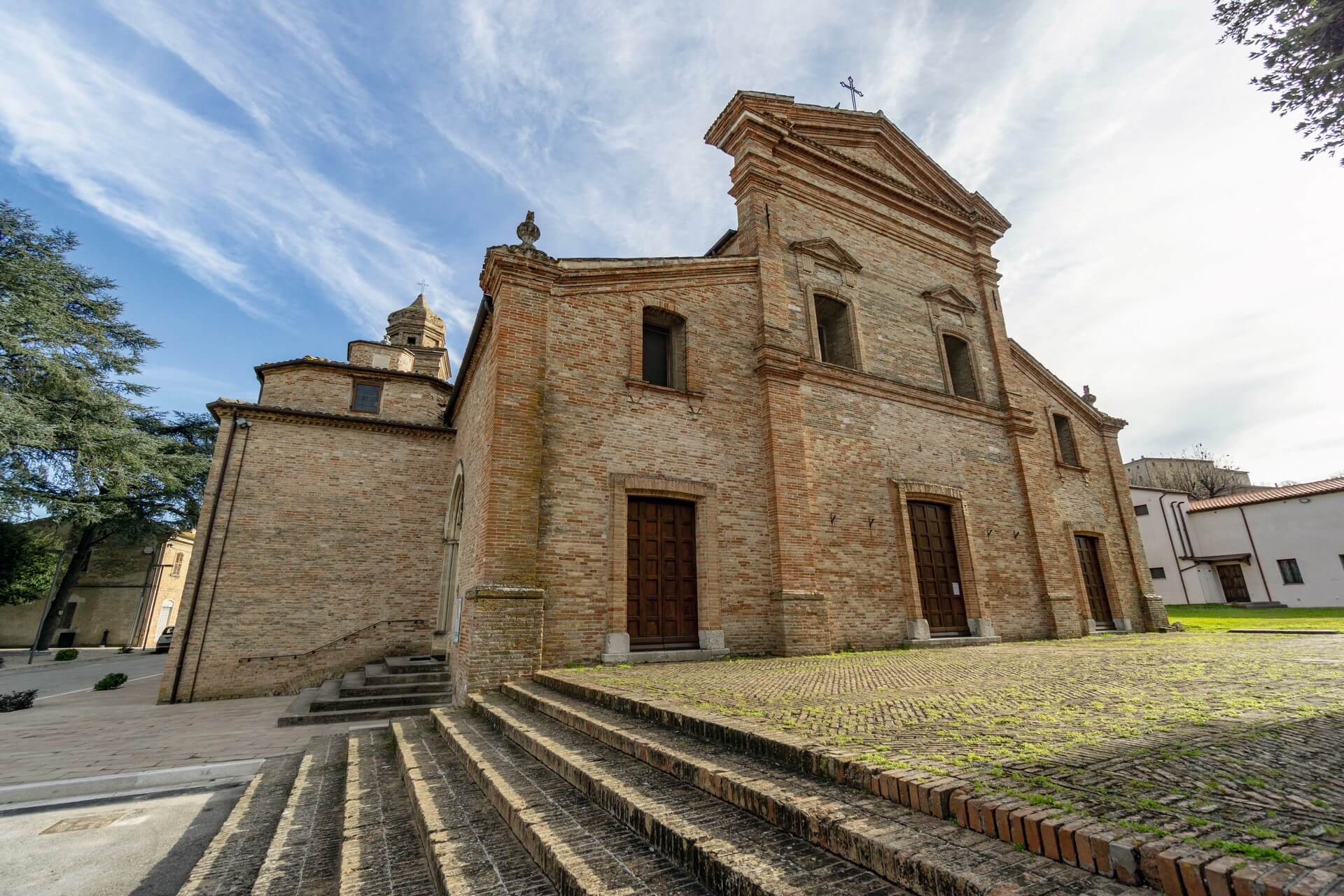

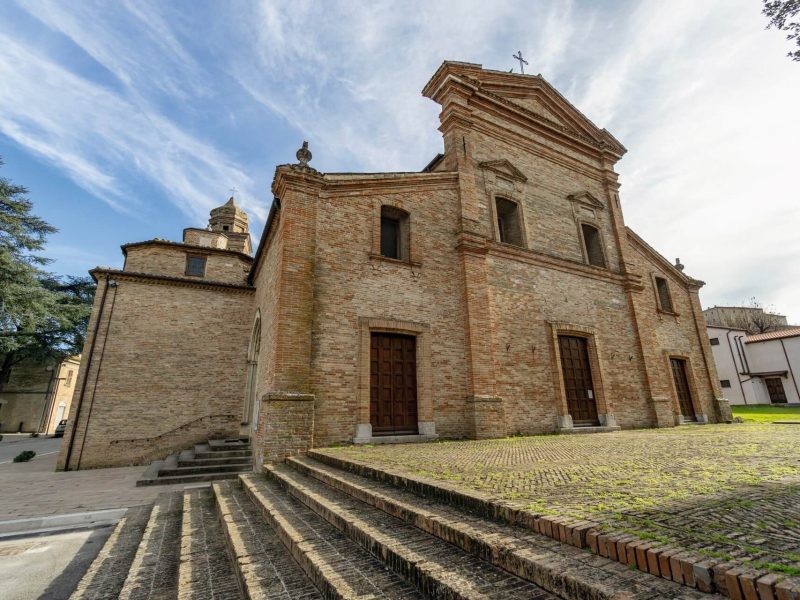
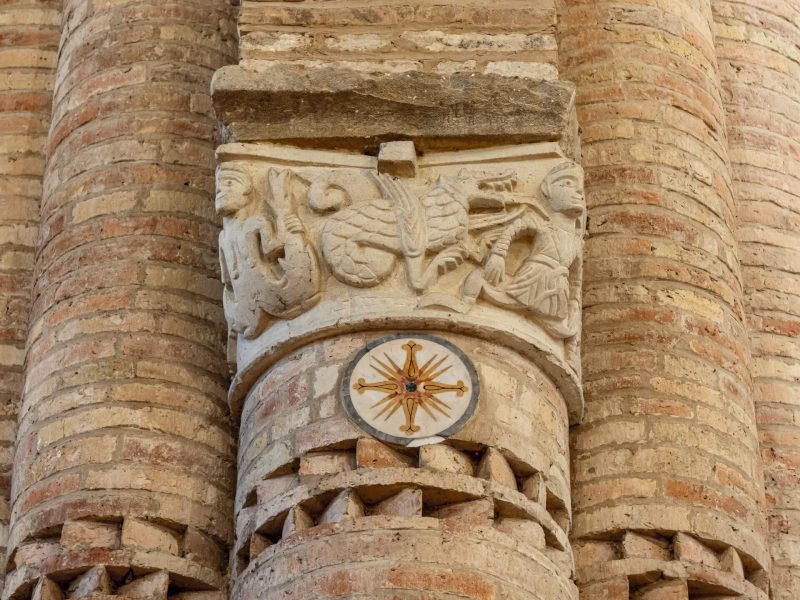
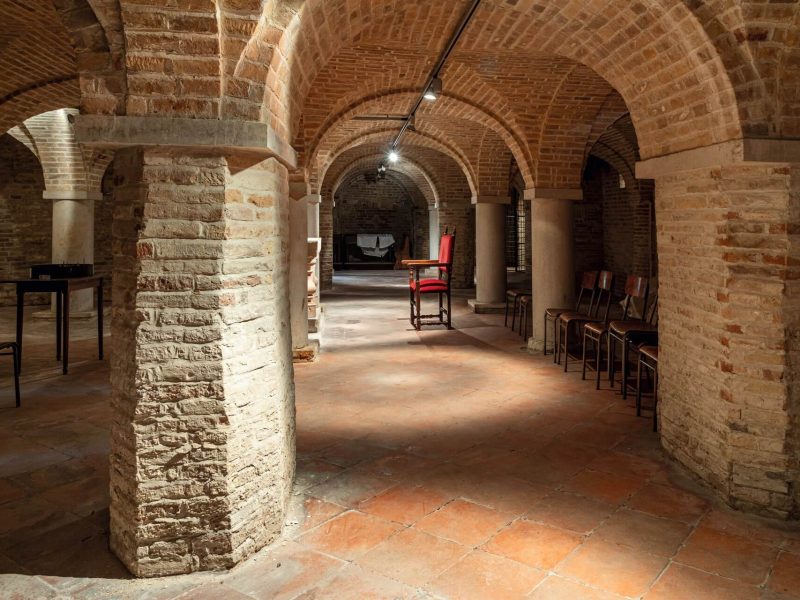
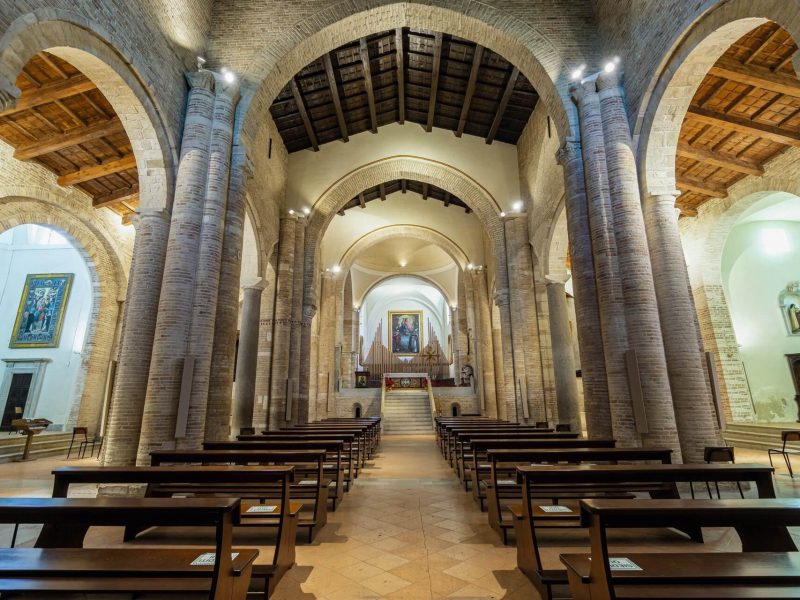
Perfectly cast into the town and in the meantime majestically raising, the three-nave San Lorenzo in Campo (S. Laurent in the Fields’) Benedictine Abbey is one of the most beautiful Romanic-Gothic churches in Marche. One remarks immediately the enormous columns, as strong as oak trees, which support round arches and charm with the feeling of balance and solemnity they inspire. Like an enormous book, the stone is marked with signs of the history of the Abbey. Much of the material used to build the church comes from the Roman city of Suasa, as is shown by the capitals decorated with vegetal motives, with images of animals or mythological creatures. A careful observer can remark the ancient Roman adornment cast into a column, representing an eagle and a shell, and even a distracted one can notice four columns made with material and bearing a colour different from the other ones, coming from Egypt. There are also many precious paintings, most of all Rondolino’s great altarpiece, portraying in the background the hamlet of San Lorenzo. And the raised altar gives a hint of the Basilica’s secret: beneath the presbytery, in fact, there is the ancient crypt guarding the relics of St. Demetrius, a Roman martyrized in Thessaloniki whose bones were found here during a restoration in 1520. After this finding of an exceptional historical importance, the local painter Pietro Paolo Agabiti was commissioned a panel representing the Madonna on the throne with the Child, St. Laurent and St. Demetrius. A detail of the panel captures our attention: it is the broken arch in the background, symbolizing the divided Orthodox and the Catholic Churches united again by Jesus’ gesture. A link that became real, as is shown by the excellent relationship St. Laurent had with the Orthodox community, to whom part of St. Demetrius’ relics were returned. The painting is kept in the Antiquarium annexed to the church, rich with many precious pieces, including a beautifully adorned goblet, a gift by Giuliano della Rovere, who was to become Pope Julius II.

San Lorenzo in Campo