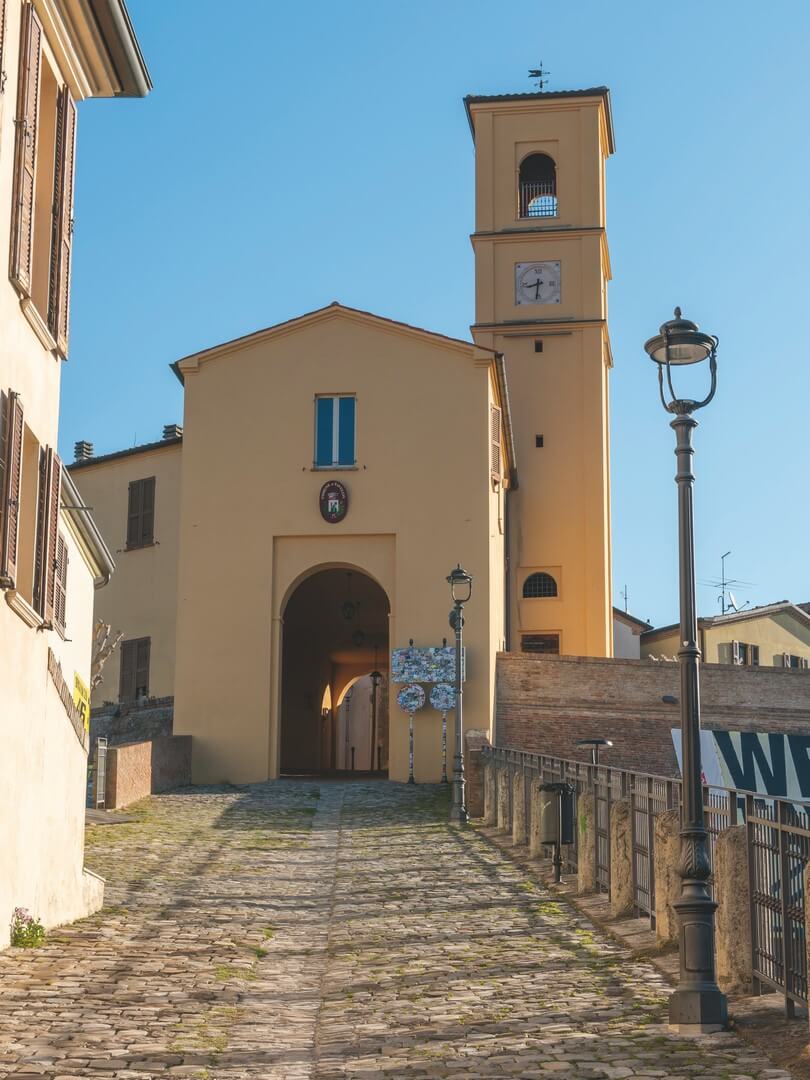

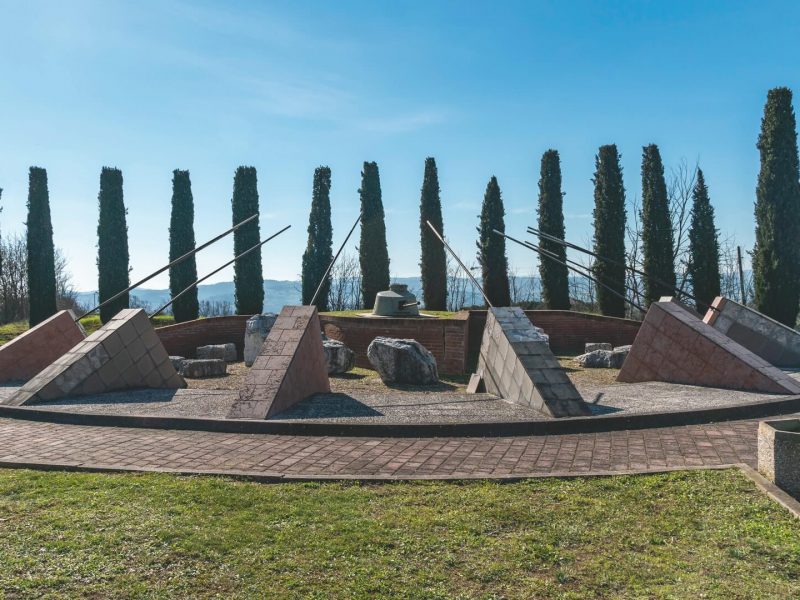
The story of Tavullia is rooted in the middle ages, when it was called La Tomba di Pesaro (“The Grave of Pesaro”). The ancient Latin meaning of the word “tomba” was actually “upland” and indeed Tavullia, because of its privileged position, was one of the main castles in the area, an inescapable watchtower: to overstep it, travellers wishing to skip the wide downhill swamps were often obliged to pay taxes or fees. The strong city walls and the city centre, a legacy of that medieval structure, are accessible by means of a narrow uphill road which crosses the walls. By one side of this access rises the Cassero, a tower from the top of which one can admire the spectacular 360-degrees panorama surrounding Tavullia. The Cassero hosts the permanent exhibition “War artists”, showing reproductions of paintings by artists who had joined the Allied troops during World War II to eternalize the war events. Tavullia, in particular, was the place where between the end of August and the beginning of September 1944 the Gothic Line, the German defensive line, was broken by the Allies. That crucial event marked a turning point for the liberation of Italy. A solemn monument near the city centre, called “Quota 204” (“Altitude 204”) was created to eternalize the death toll paid to get that result. While walking in the alleys of the city centre one can taste their stillness, admire the nice houses and end up upon charming panoramic viewpoints. A little square brick structure, in one of the little piazzas, raises from the ground and catches the visitor’s attention. It is the mouth of the snow holder, a great basin which people in Tavullia filled with snow in the Middle Ages, as an ante litteram freezer to keep their food.
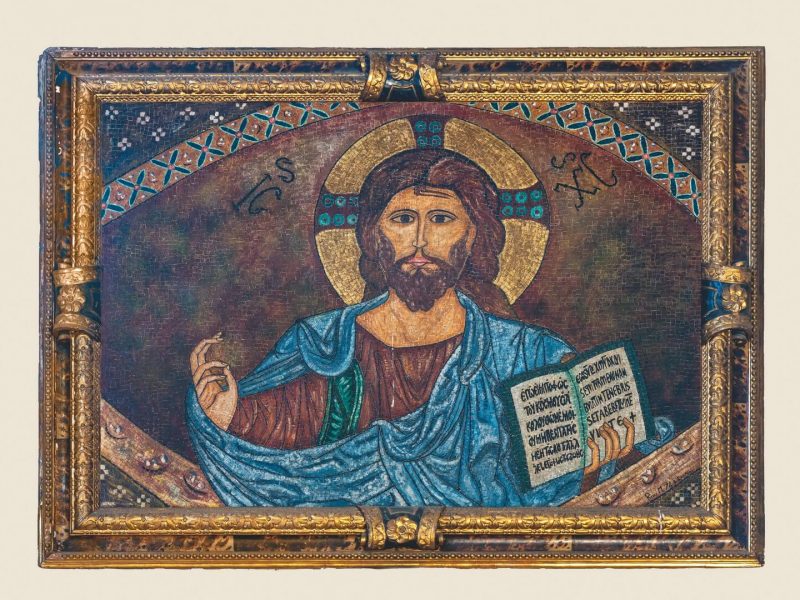
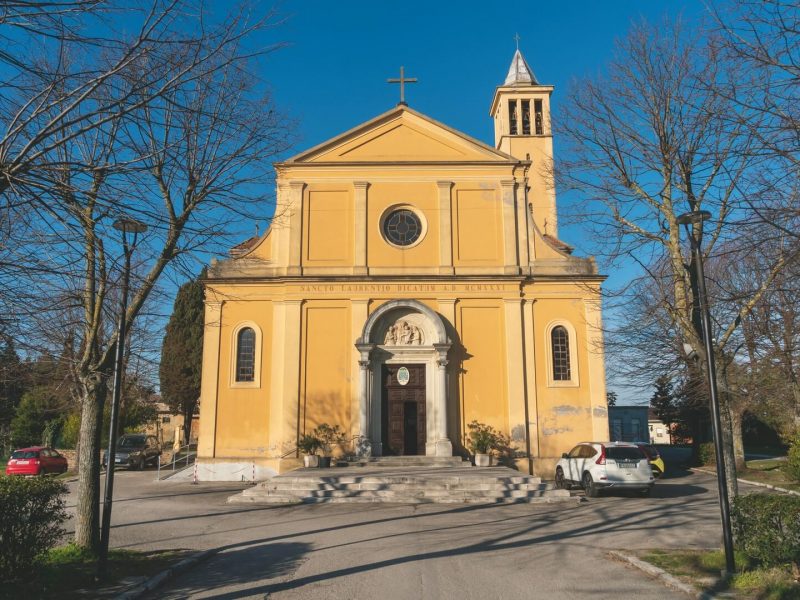
Overlooking the city centre, raises the façade of St. Laurent Martyr’s. In the church are kept the relics of St. Pius Martyr, to whom the city of Tavullia always dedicated a heartfelt devotion. Worth visiting, in the church, are beautiful mosaics which might make one think of a Byzantine influence, whereas they are the work of children from Tavullia, a sign not just of faith but also of creativity and affinity with the territory.

Tavullia