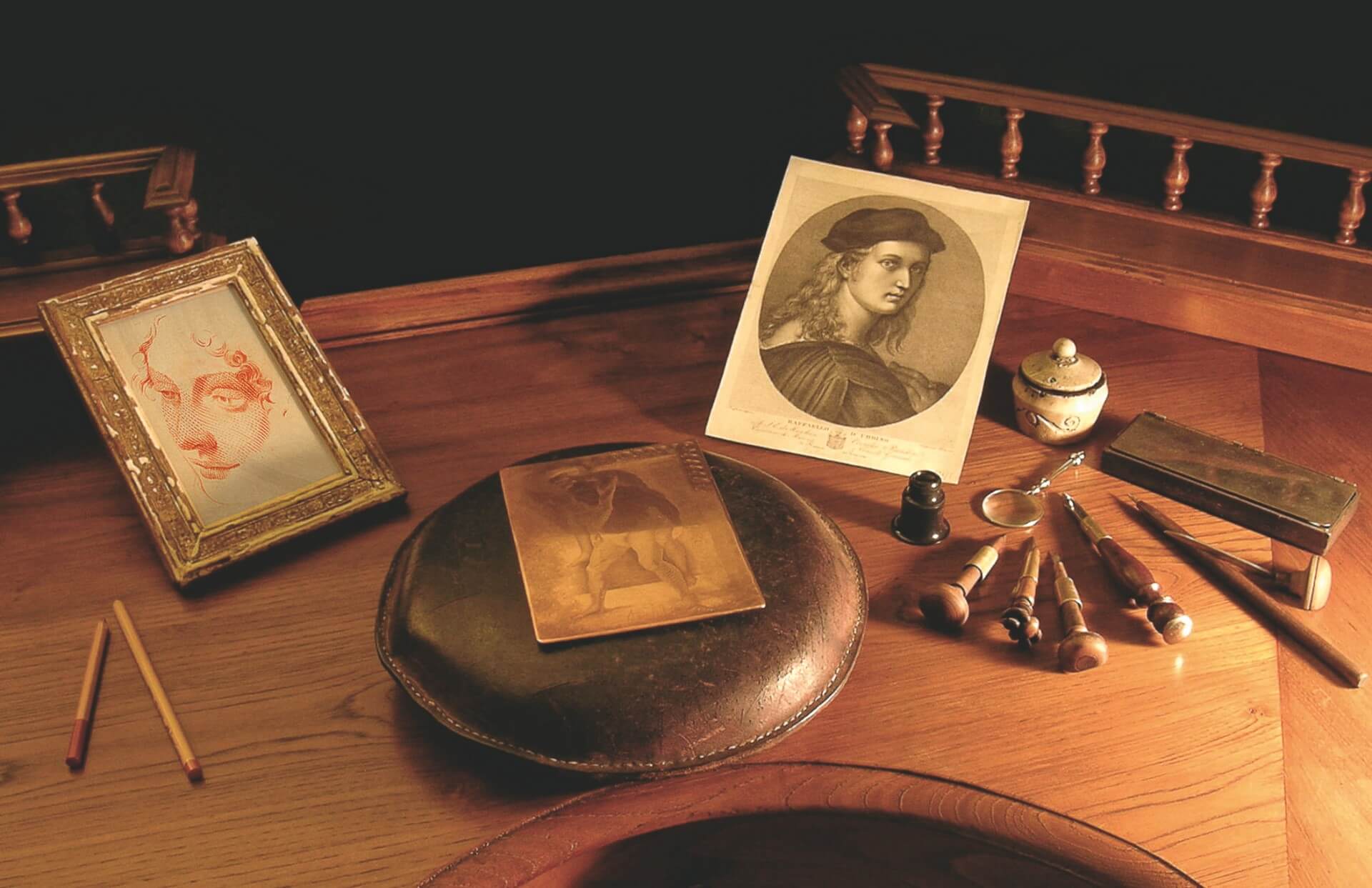

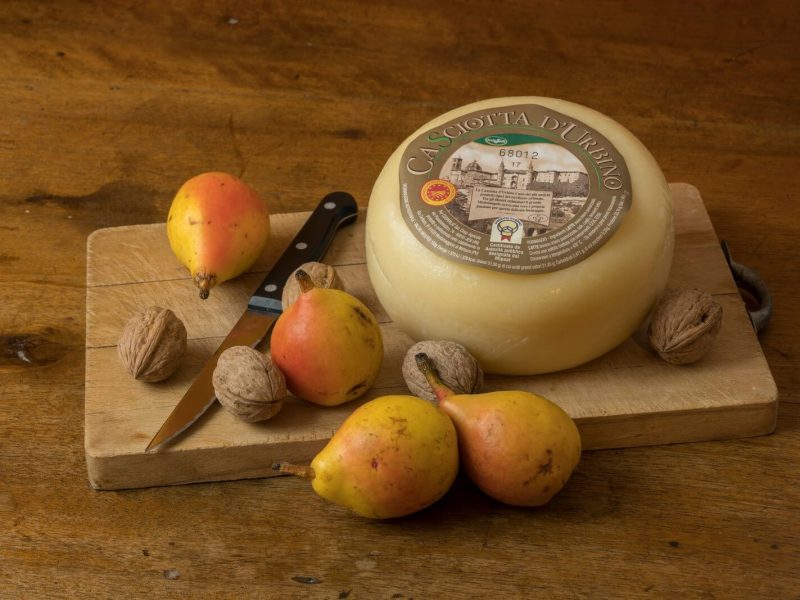
In the very historic centre a road runs, a vital artery, vibrating with creativity. It is Via Valerio (Valerio street), better known, by now, as Via delle Arti (Arts street): a place where, thanks to activities, meetings, exhibitions and festivals promoted by Artigianarte, a cultural association, one can feel again the artistic vitality of the Renaissance ateliers, where flair and craftsmanship of artisans met to give birth to wonderful works of art. Via delle Arti hosts nowadays places where, for instance, majolica creations are made, as well as stone sculpture and metal works, and Jazz music is performed and promoted by Urbino Jazz Club, with incredible creative energy. But Urbino is not just art, culture and craft: it is also a place to be tasted and savoured. The Montefeltro area, starting from Urbino, is the homeland of white truffle, of which the wide surrounding extensions of woodland produce a very important quantity. Nor should be forgotten the Crescia Sfogliata of Urbino, one of the most appreciated dishes on the table of the Ducal Court. It is a noble and rich flat bread course, born under the mark of Renaissance between the XV and the XVI century. A few, simple hand blended, kneaded and cooked ingredients such as flour, eggs and top quality lard, make the Crescia Sfogliata one of the most loved local products. And what about the DOP Casciotta d’Urbino? The name itself (it is pronounced kashòttah), with its “c” kissed by the “s”, tells how authentic, original and unique that cheese is. Its mellow taste, its unspeakable delicacy, the flavour and the perfume of blended cow and sheep milk recall the pastures in Urbino farmland. Such food is a source of inspiration, energy and creativity: they tell that Michelangelo Buonarroti loved this cheese, and while painting the frescos in the Sistine Chapel, between one brush stroke and the other, he tasted the Casciotta d’Urbino, which was regularly supplied to him by his faithful servant Francesco Amadori da Castel Durante, nicknamed “Urbino”. The artist loved this cheese to the point of buying a number of small farms in the Urbino farmland, to grant himself a permanent supply of Cashiotta.


Urbino