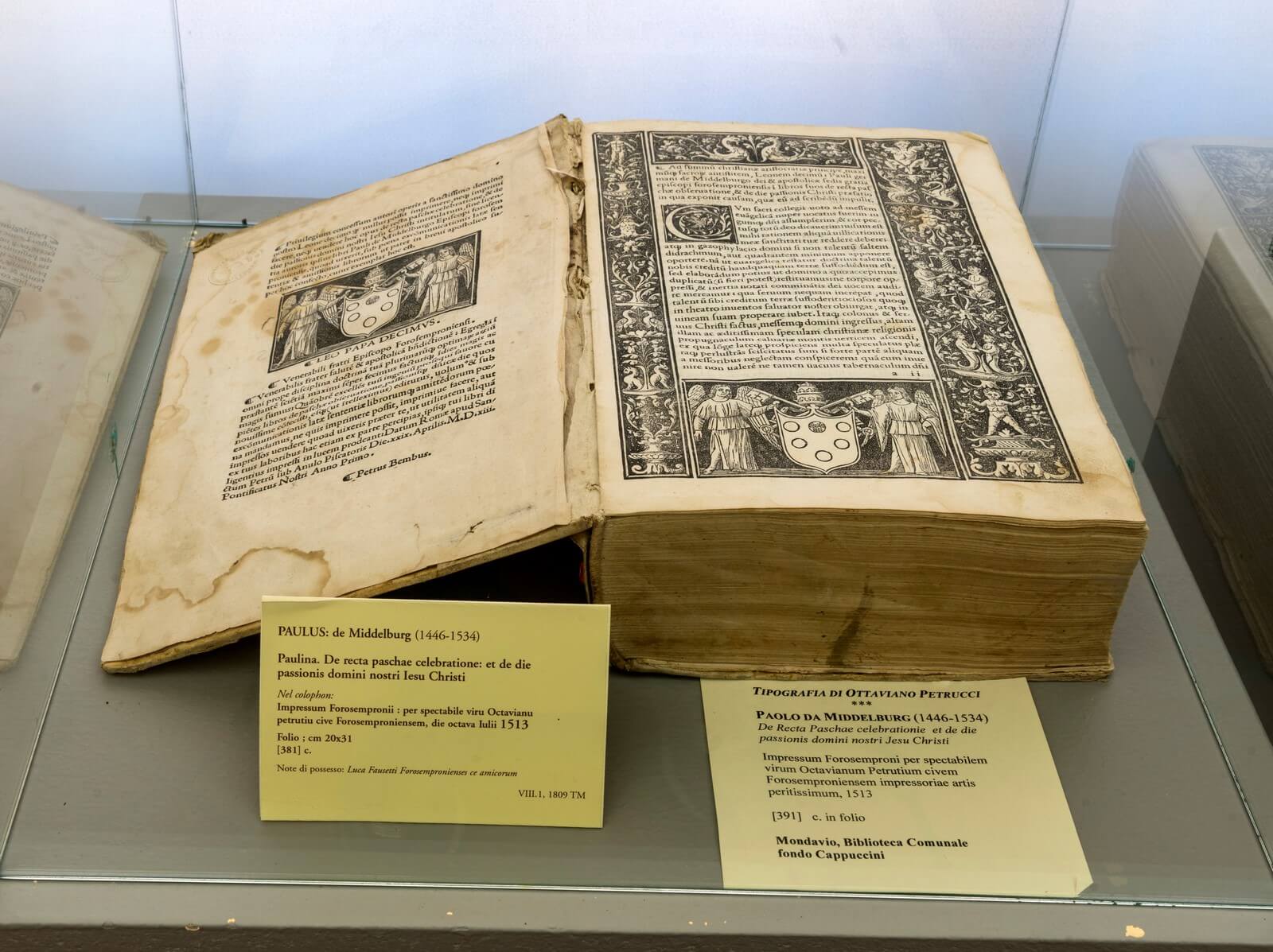

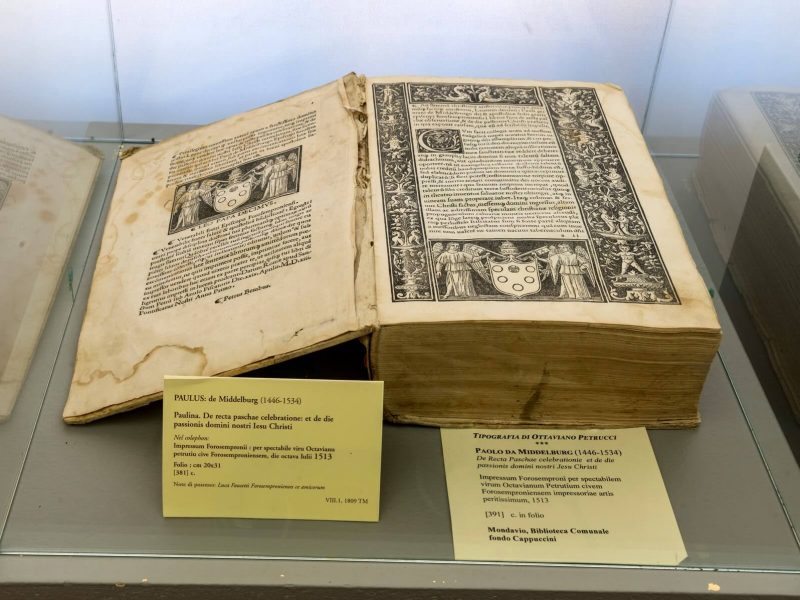
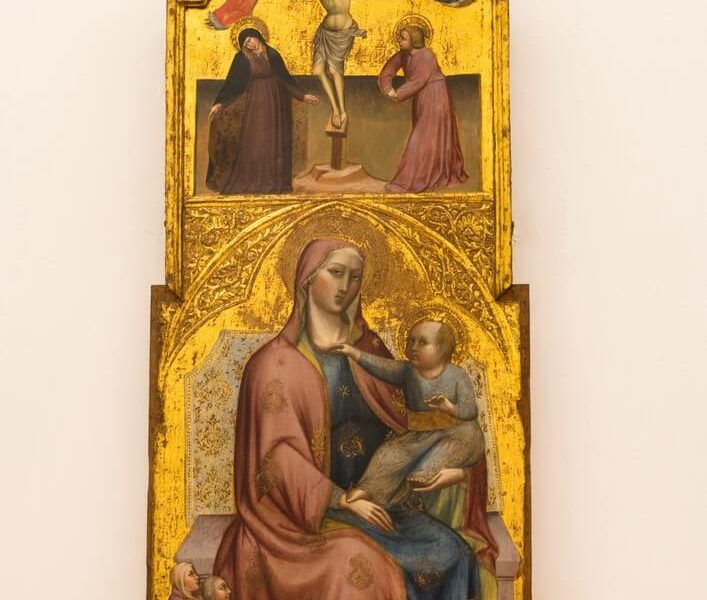
A little Seventeenth-Century jewel, obtained inside a deconsecrated church once dedicated to St. Philip Neri, nests in Piazza della Rovere, as if trying to hide. After finding it, one is charmed by what is indeed a little bonbonnière: it is the Apollo Theatre, which amazes visitors with the natural elegance of the watercolour floral elements decorating its ceilings and with the still working machinery that lifts up and aligns the parterre with the stage for the performance of bal masqués, which were very in fashion at that time. The theatre holds no more than 70 seats and was very active in the Nineteenth Century, to the point that to face the afflux of spectators Piazza Della Rovere, which did not exist before, was built by the mid-Seventeenth Century. In the City Art Gallery, divided into four thematic halls, such priceless works are hosted as the La Paulina incunabulum by Paul of Middelburg, an astronomer and humanist, concerning the issue of establishing Easter days, the precious Thirteenth- Century altarpiece portraying the Madonna on the throne with the Child and two donors, and the Crucifixion in the pinnacle, a painting by Olivuccio di Ciccarello from Camerino. An image, peculiar due to its unusual subject, portrays the death of St. Joseph, who is recognizable because of his carpenter tools.
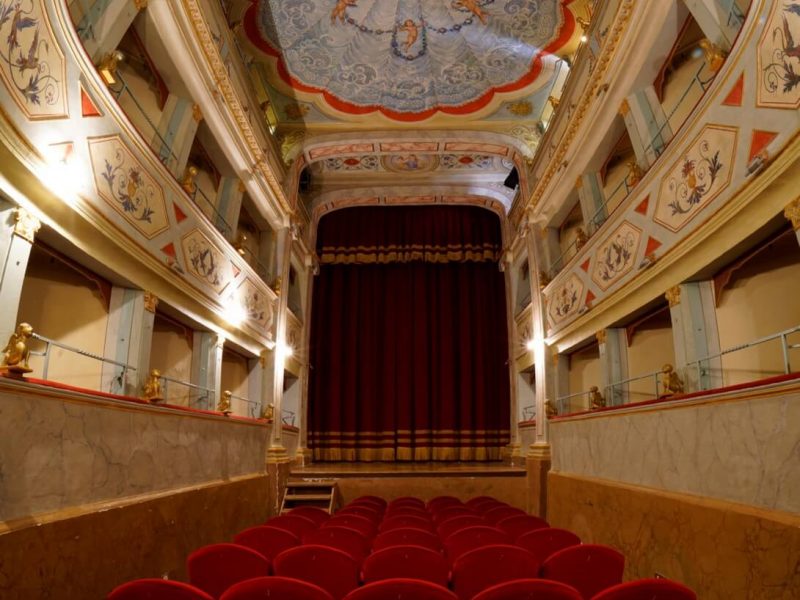

Teatro Apollo