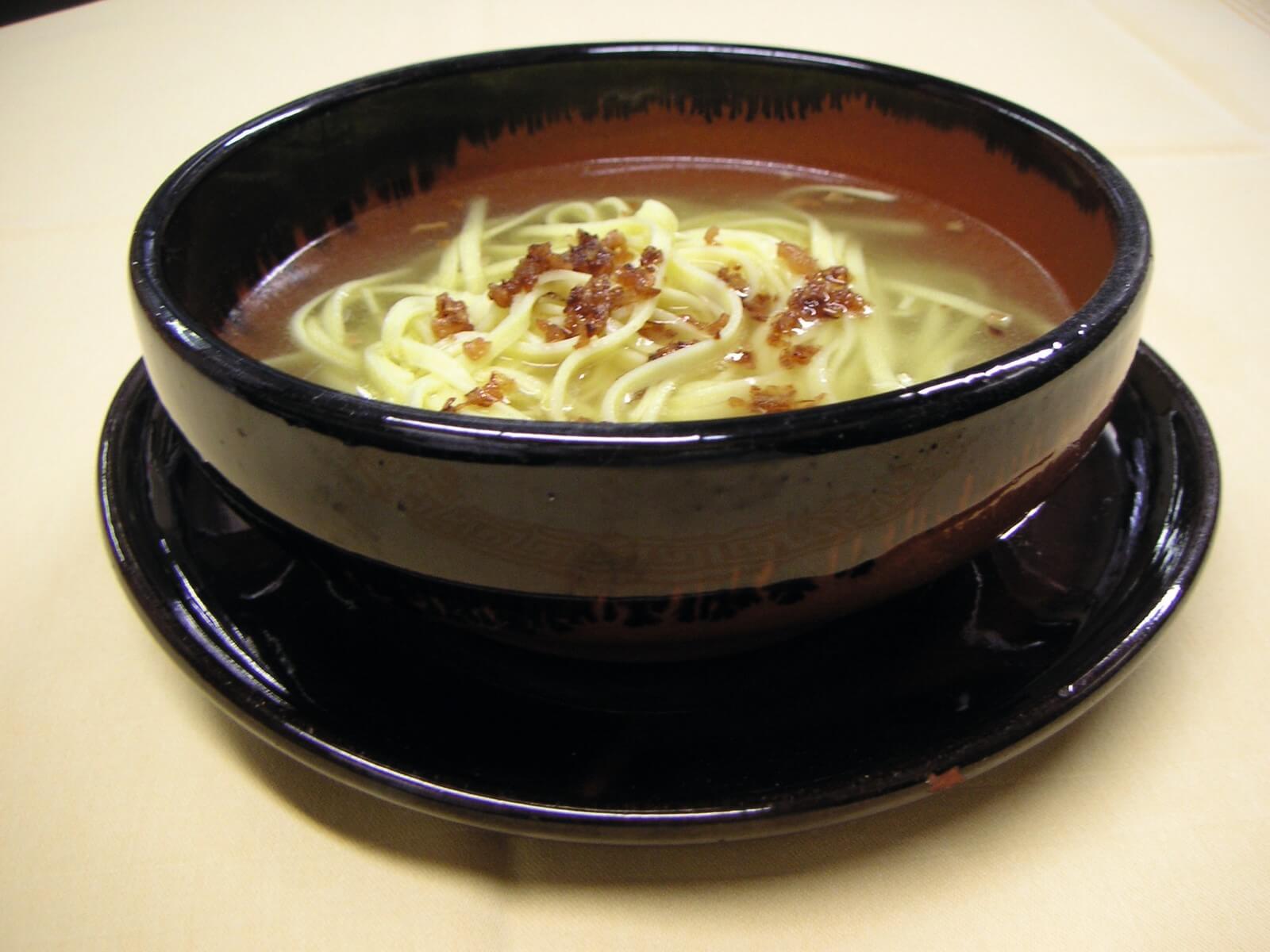

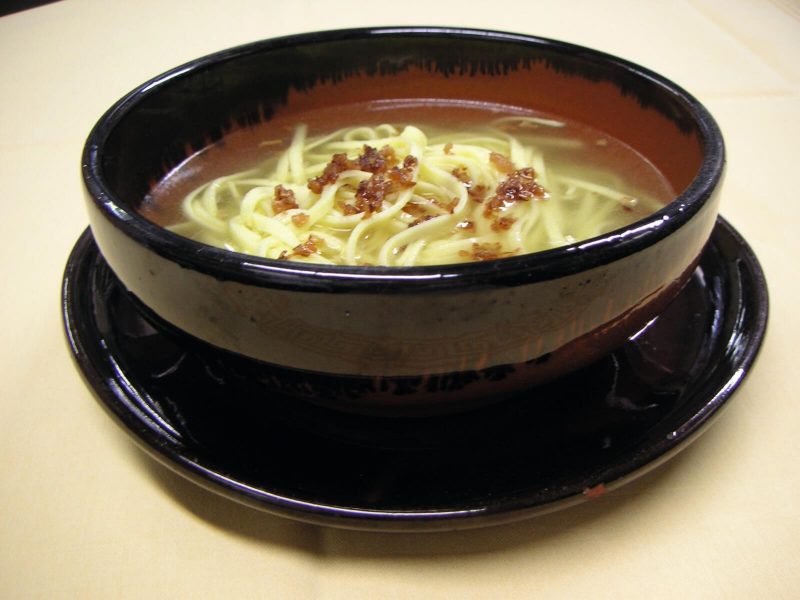
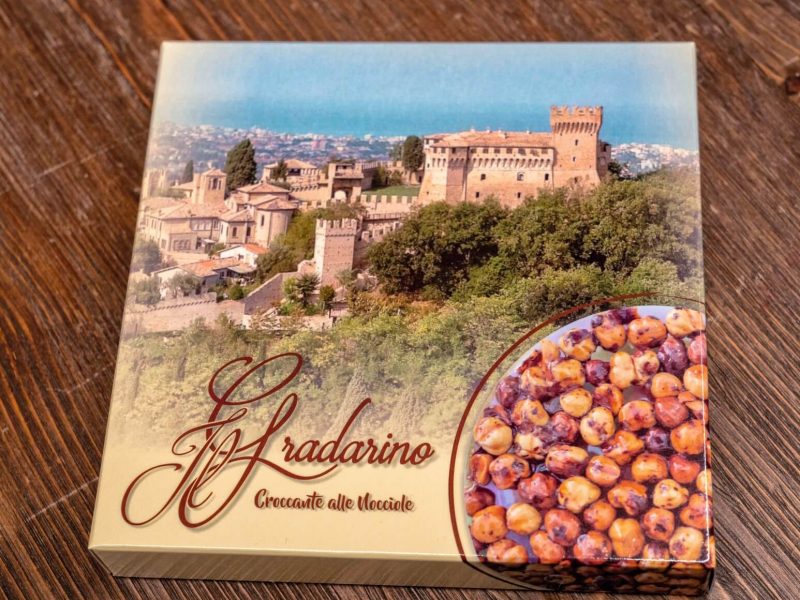
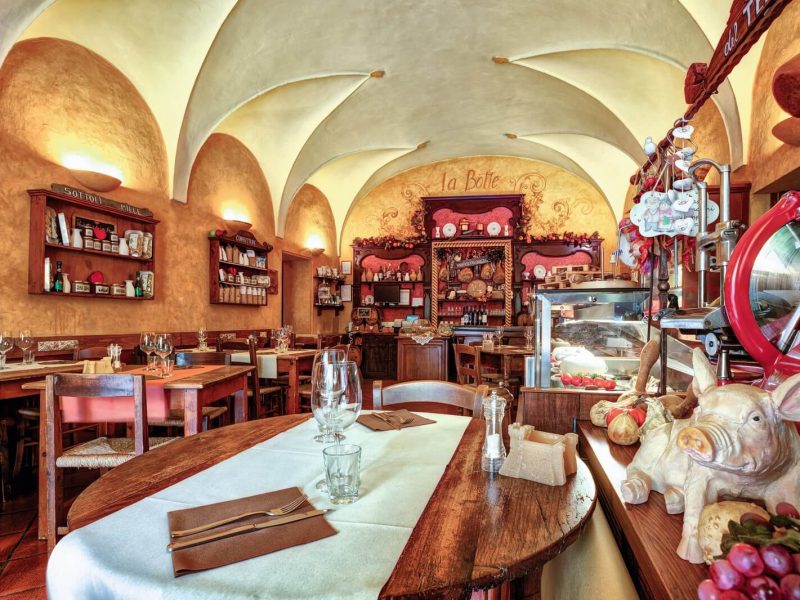
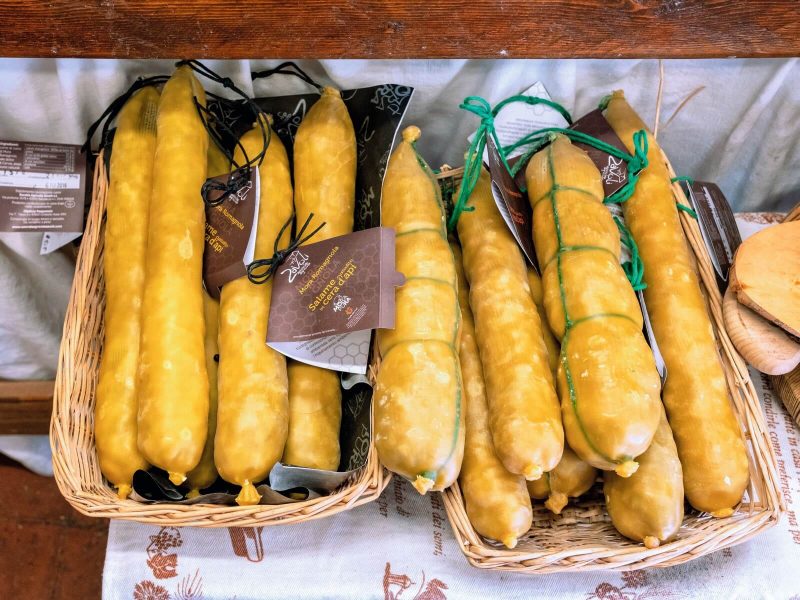
Gradara is a border town whose story is waved together with the one of nearby Romagna wih and its tastes, so much so as someone speaks about “marchignola” (Marche’s and Romagna’s) cuisine, a mix of tastes from the two regions, as is shown by the name of the Cibovagando (“Touring food”) inn, and by the variety of courses offered at the “Emporio del Gusto” (“Emporium of Taste”) from Marche and Romagna, which along with such typically products from Marche as olive oil and wine, offers the big pear grappa, a fruited spirit, and a strange salami kept into a golden wax case, which are instead typical products of Romagna. Gradara, however, does not lack products strictly tied to its own story, such as the Gradarino almond brittle, and the “Galeotto” toffee, whose flavour recalls the sweet passion between Paolo and Francesca. Still, the most traditional recipe by definition are the “Tagliolini con la Bomba” (Bomb egg noodles). They are a typical winter recipe that was prepared into the large hearths of the farm houses by the “azdora”, the matron queen of the house, by frying onions and lard (or fat bacon) in the excellent local olive oil; meanwhile, the noodles were cooked in salt water; most of the water was then drained, leaving them a bit soupy, and the fried onion and lard were poured into the pot, also adding some pepper. The mixture of hot oil and water caused a real explosion of vapour, after which the dish is named. It was eagerly eaten by the children, both because of their hunger, and of the wish of getting soon another portion. The fast suction made the hot noodles bounce on the children’s nose, and since that was an almost every day meal, the little burns could hardly heal. It is still possible, today, to taste this “poor” but tasty dish at the “La Botte” restaurant which, like everybody in Gradara, loves to stand by the local cooking tradition, revived during “The Middle Ages at the Table” days, dedicated to the medieval cuisine, which are put in place round the year, when the hamlet’s restaurants turn into real XV century taverns.
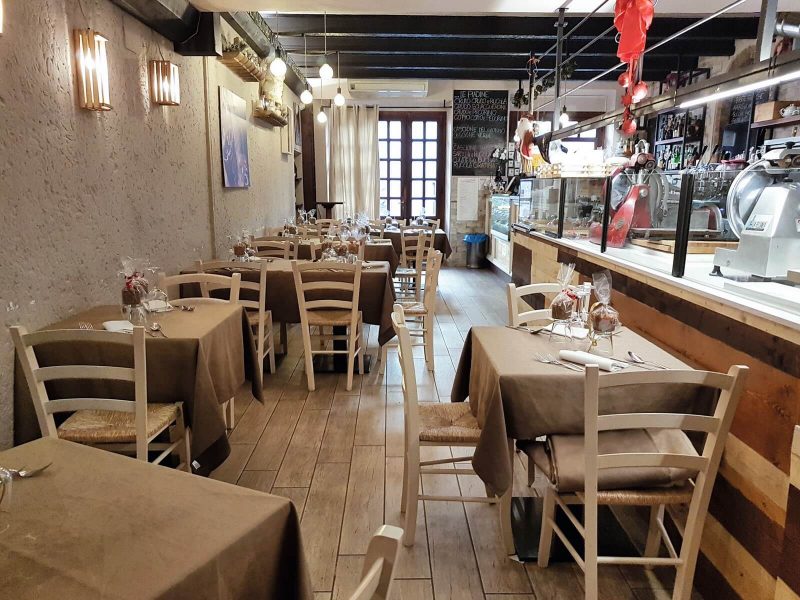

Cibovagando