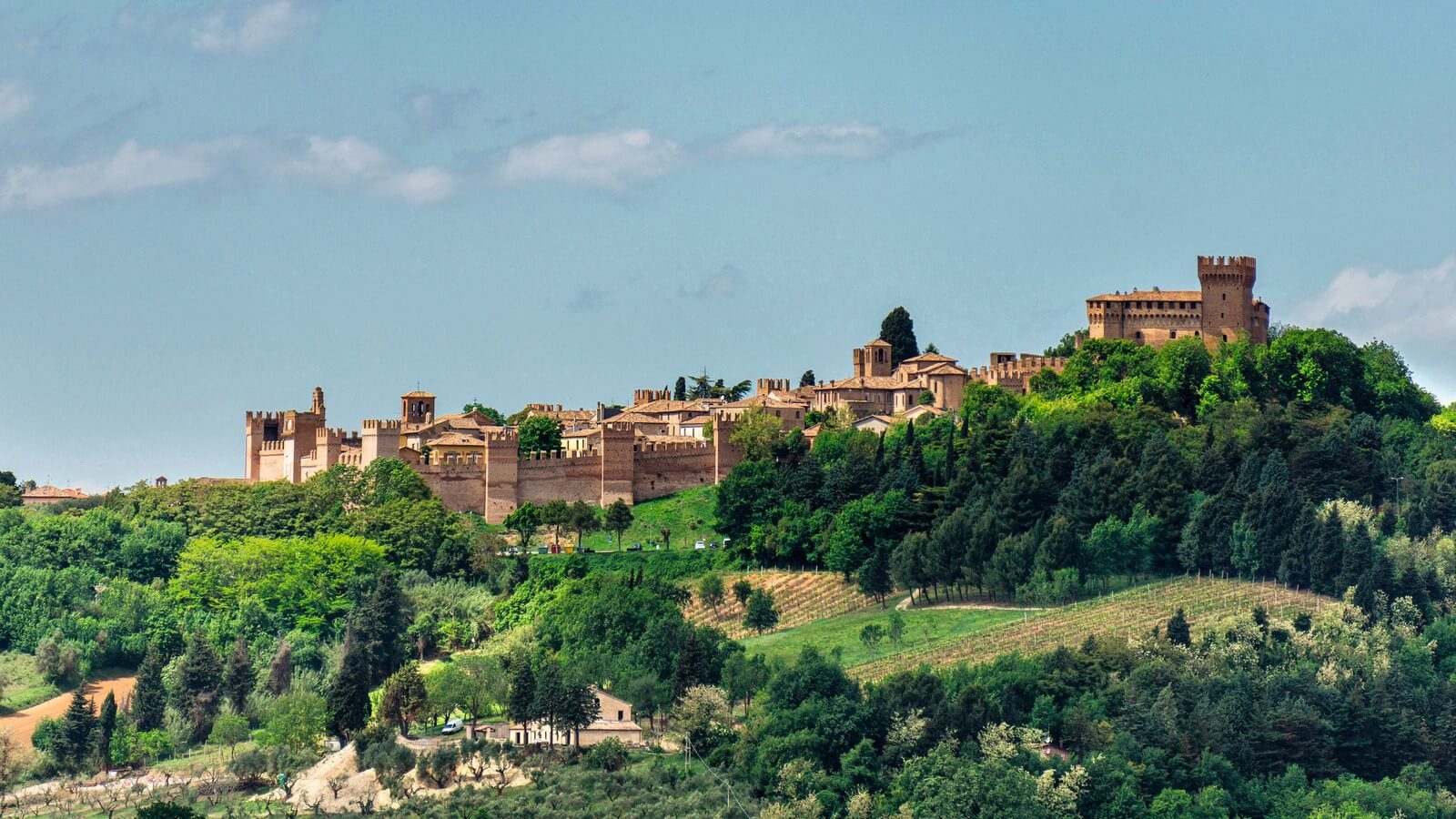

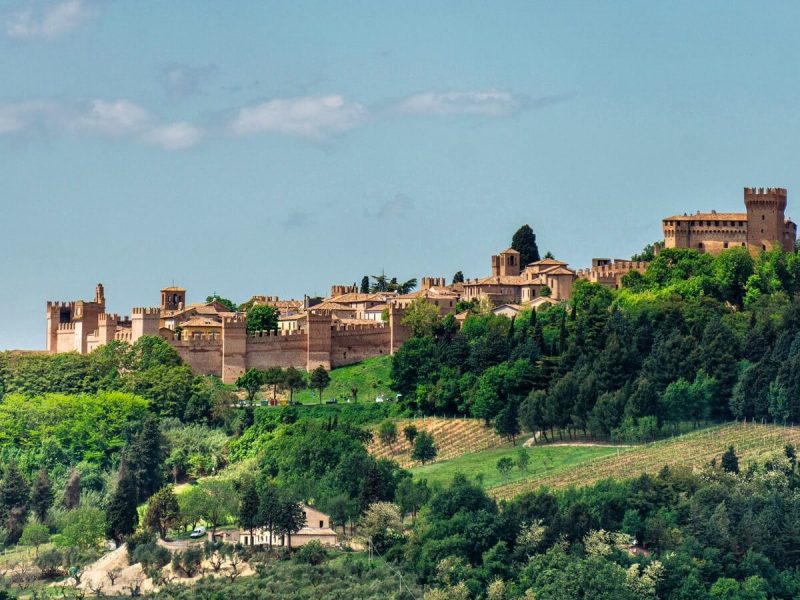
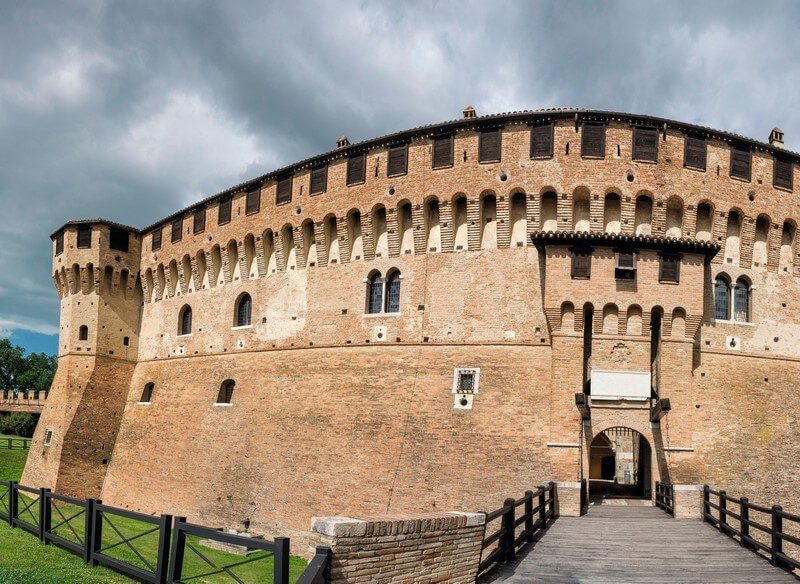
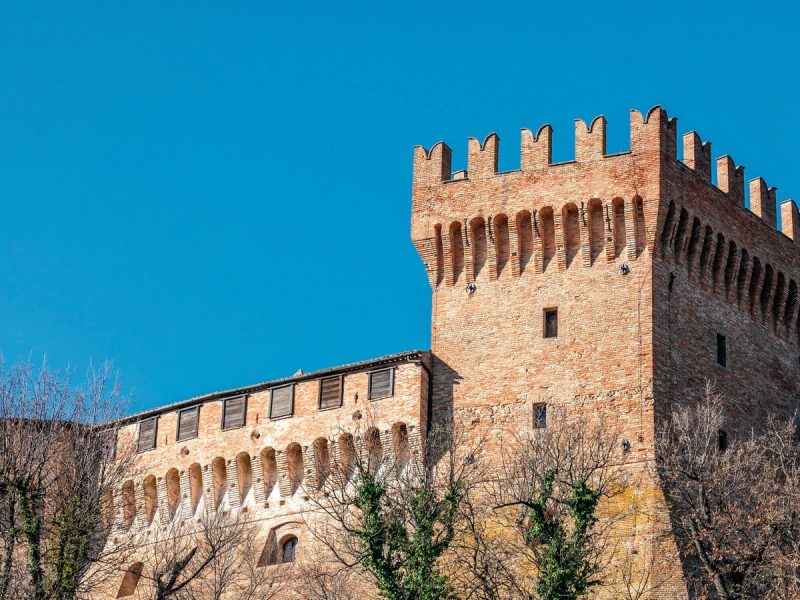
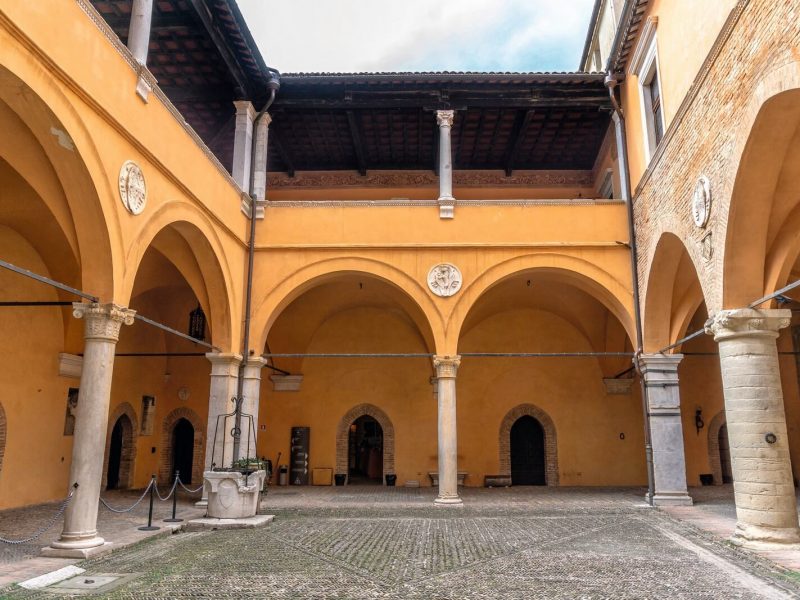
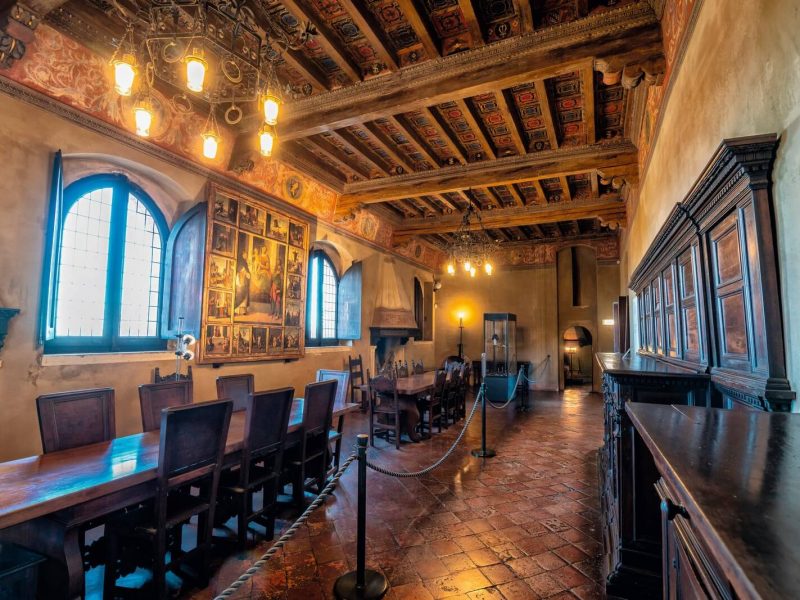
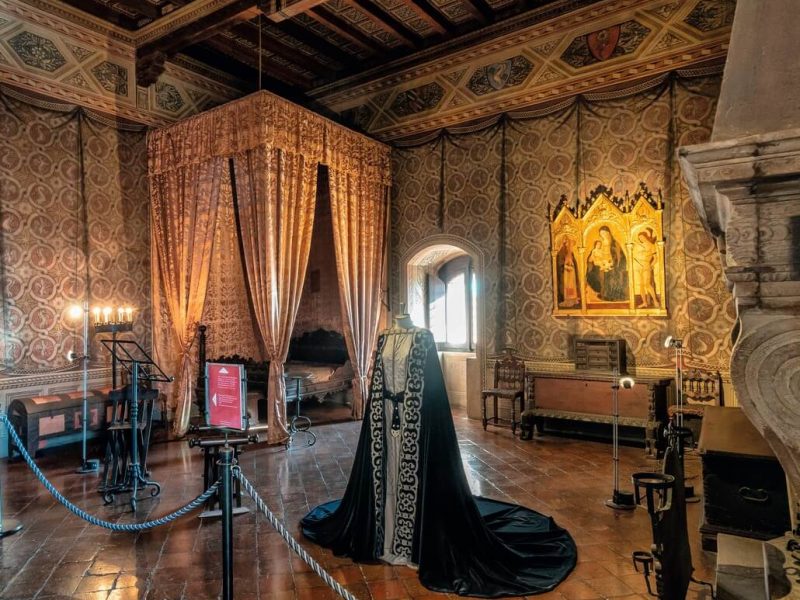
Gradara always identified itself with its Castle. Protected by its ramparts, the citadel, which for centuries protected noble and famous dynasties, is the ancient but lively heart of the surrounding hamlet. The almost forty meters high main tower dominates the surrounding valley. It was built in the XII century by the De Grifo family, who were later replaced by the Malatesta family. Their power over Gradara ended after a long siege by Federico da Montefeltro, who fought on behalf of the Church. The Castle, now a state property, underwent many changes during its long story. Enlargements and modifications were made to the original structure under the Malatestas and the Sforzas. Giovanni Sforza, in particular, added two wings to the inner court and an honour staircase, leading to the halls of the “piano nobile”, when he got married to the very young Lucretia Borgia, a daughter of the terrible pope Alexander VI. Inside the strong and intimidating shell of the fortress, after crossing the drawbridge, a tasty fruit of art and beauty is disclosed. The interiors are in fact characterized by the presence of ancient furniture, placed into rooms bearing evocative names which, in addition to valuable frescoes, offer beautiful glimpses upon the rich natural landscape of Mount San Bartolo. After crossing private rooms and military areas, one finally gets to the famous Room of Francesca da Rimini. Inside, further to a four-poster bed, there is the trapdoor, which is said to have been used for his love raids by Paolo, who here is said to have found death with his loved one, as Gianciotto’s revengeful blade pierced them both. In the room is also shown a splendid stage dress, tailored by stylist Alberta Ferretti, reproducing the one made for Eleonora Duse, lover and inspiring muse of D’Annunzio, who wanted her to play Francesca da Rimini’s role in his homonymous tragedy. In the Castle there are also precious works of art: one of the most remarkable ones is the altarpiece painted by Giovanni Santi, the great Raphael’s father and, inside the chapel, Luca della Robbia’s glazed earthenware altarpiece.

Gradara