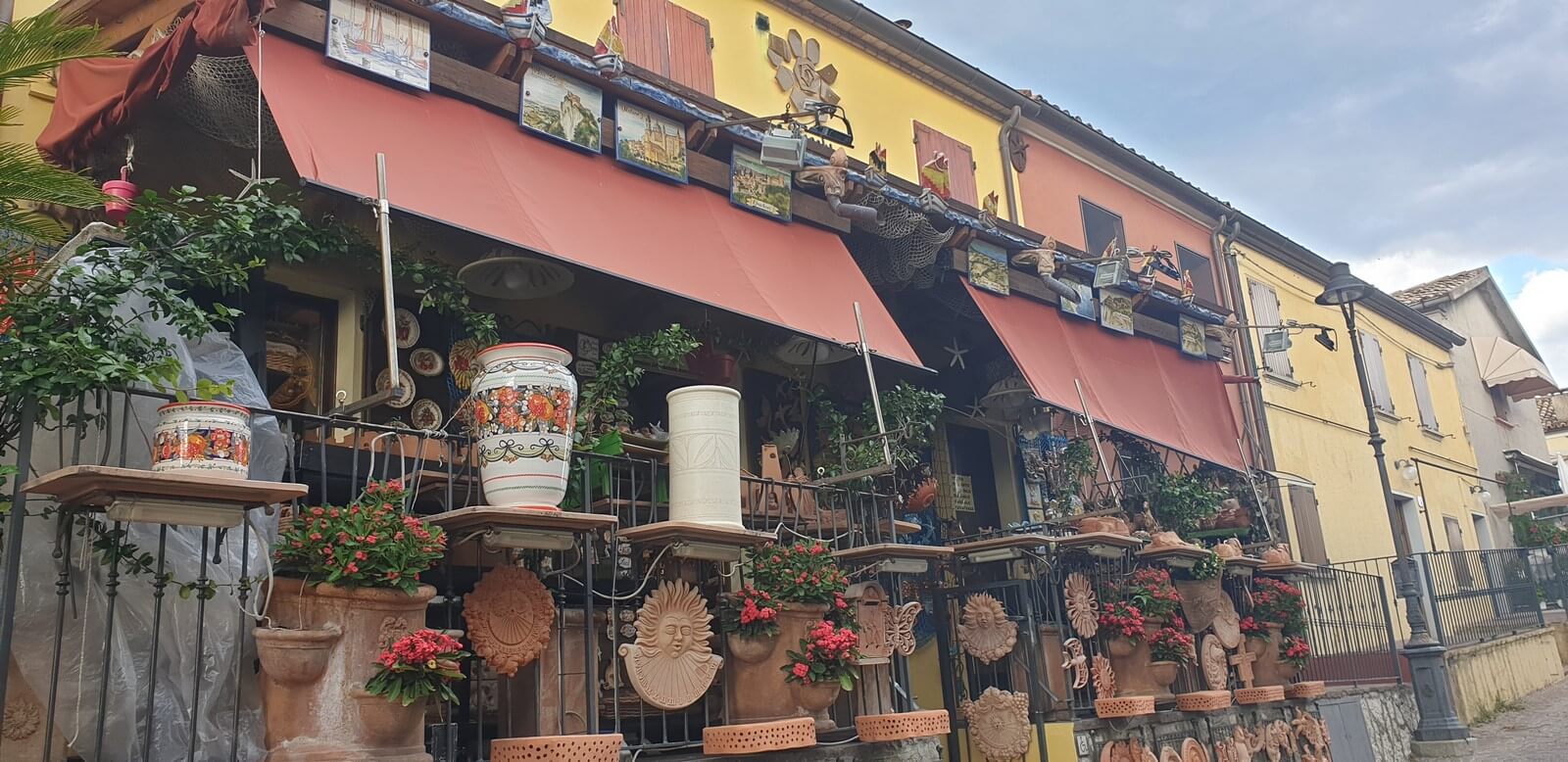

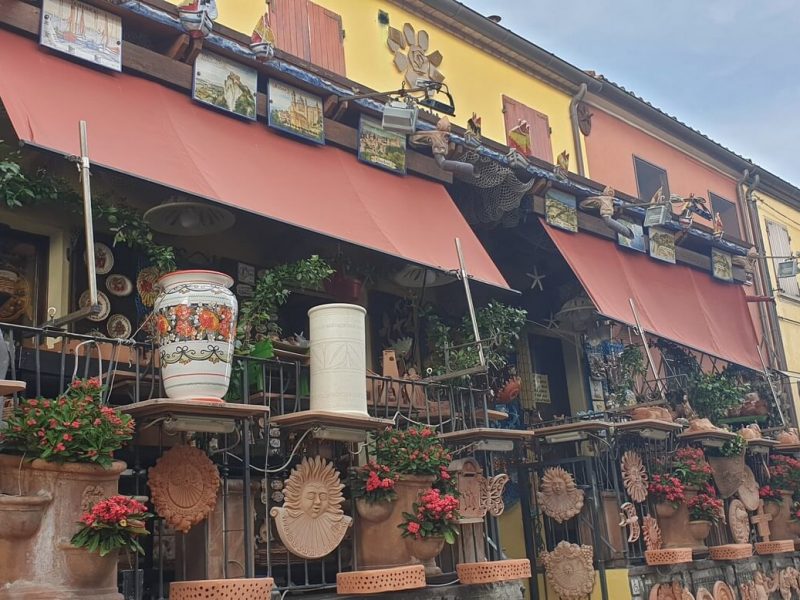
Even though some archaeological findings confirm that Gabicce was already inhabited during the Roman age, it is only in 998 that a papal seal first quotes it as Castellum Ligabitii. The name suggests the presence of a by now completely disappeared defensive wall, an idea of which is offered only by the images created by Francesco Mingucci, a painter and a cartographer from Pesaro, and by what is left of the ancient borough of Gabicce Monte, the original nucleus of the town. Here stands St. Ermete’s, a small but charming ancient church. The etymon of the place’s name is probably connected to Ligabitius, the local lord’s name. A more fantastic hypothesis links the name to the expression “Liga i bicci” (tie the bicci), meaning “tie the rams”, referring to pastoralism, once common around here. The story of Gabicce in the middle ages is characterized by the conflict between the Bishop of Ravenna and the municipality of Pesaro for its possession, which led its citizens to ask for the protection of local powerful families. The name of the town was made famous, at that time, by the art of potters Girolamo and Giacomo Lanfranco, a father and his son, who created beautiful terracotta works enriched with gold ornaments, a technique they pioneered and deserved them international fame: their works are still on show in important museums. The endless fights and changes of Gabicce rulers came to an end in 1623 when the Church finally got its control, but then a slow downfall begun for the town. A new turning point and a rebirth occurred after World War II, when the town devoted itself to seafaring and beach tourism, exploiting its natural context and its welcoming attitude. So much about documented history; but still nowadays some people imagine that the stones covering the cobbled beach are in reality fragments of the legendary ancient city of Valbruna, which according to myth was destroyed by a terrible explosion. In the brightest days, when the water is crystal clear, swimmers and divers still love looking for the roads and the remains of this Gabicce Atlantis in the geological concretions on the sea bottom.
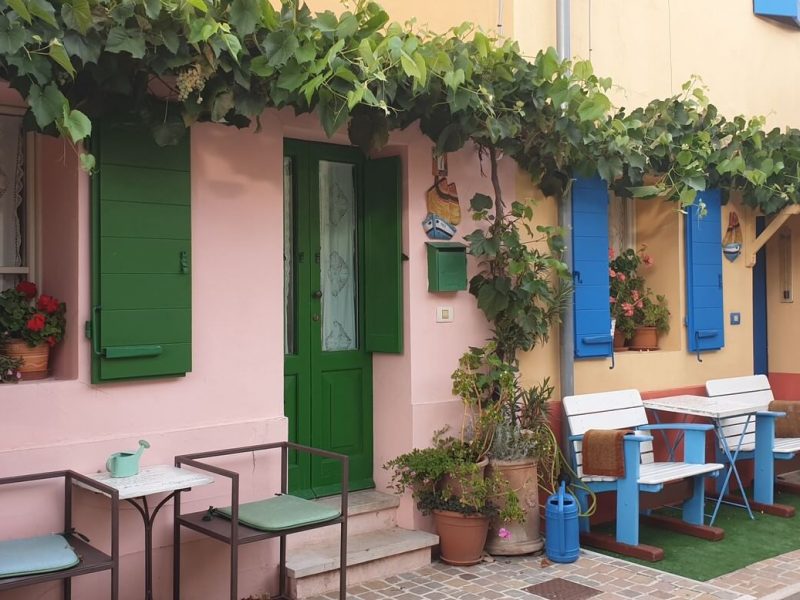

Gabicce Monte