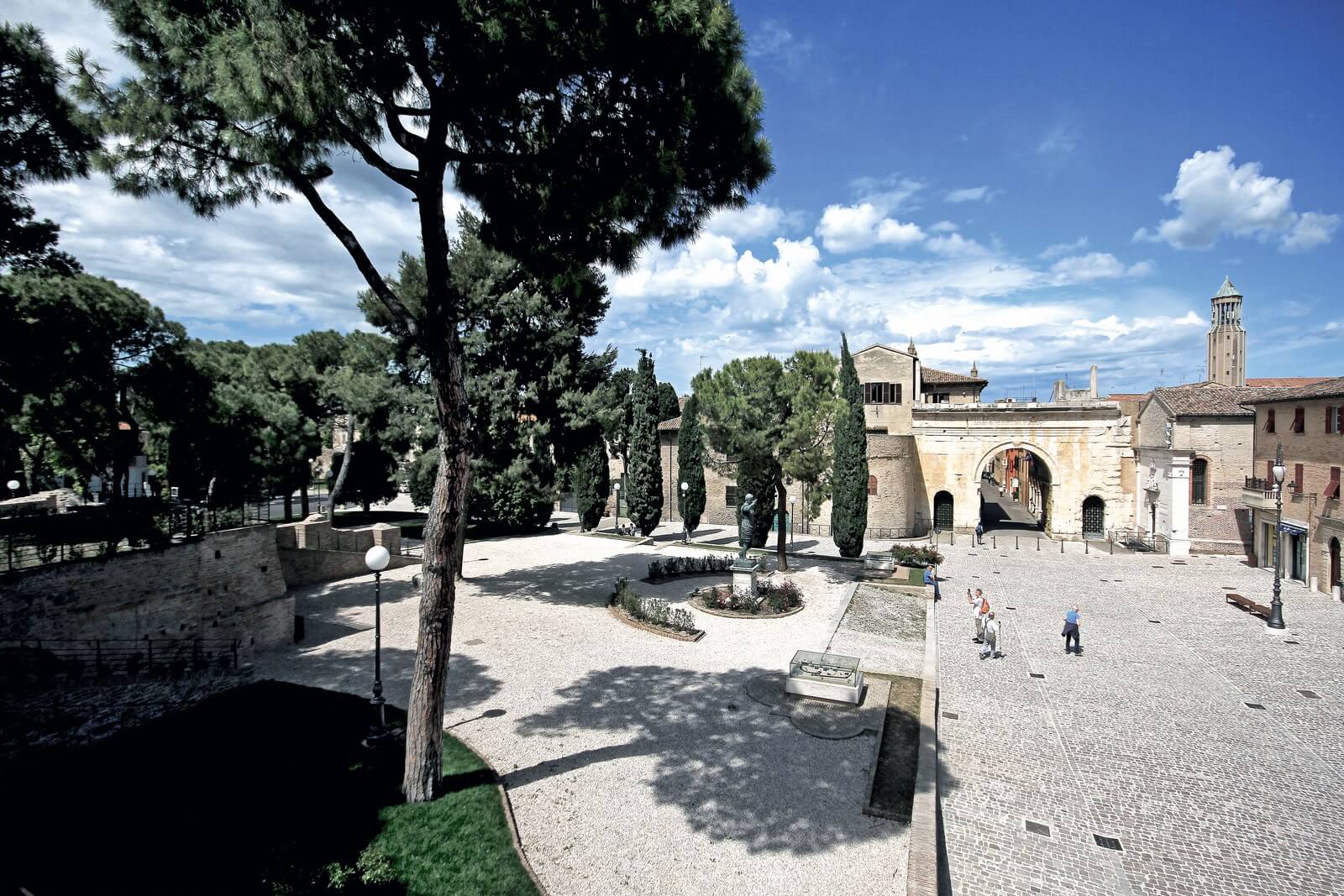

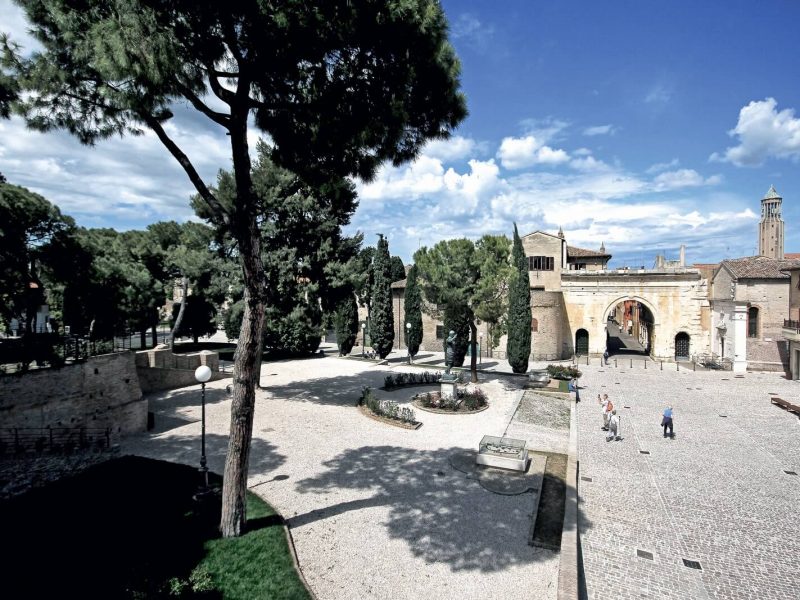
After spending a day in Fano, one is surprised of not hearing people speak Latin. The city in fact is an unparalleled treasure trove of vestiges from the Roman age. The city center of Fano was the terminal point on the Adriatic sea of the great Flaminia Road, which joined the Great Decuman gate through the Arch of Augustus, nowadays the emblem of the city. The Emperor had it built in 9 A.D. to serve as the main gate, a task it still accomplishes solemnly. Near it the Museum of Flaminia Road was created, which with digital and virtual applications enables visitors to learn more about the Roman inheritance of the city and of the whole area touched by the ancient consular Flaminia road. The Arch marks the beginning of the imposing belt of the city walls, pierced nearby by Porta della Mandria, a secondary access created to improve the flow of traffic. The walls were built based on the technical instructions Vitruvius wrote in his treatise De architectura (About architecture), dedicated to Augustus, which made its author an undisputed master of this discipline. Vitruvius’ mark on Fano is deep and the city is proud of it. Here rose the only work he declared he had designed and built himself, the unfortunately lost Basilica. The location of this legendary building stimulated the fantasy of generations of archaeologists. Nowadays, in the Archaeological area beneath St. Augustine’s, one can admire imposing structures, findings alternatively attributed precisely to Vitruvius’ Basilica and to the Temple of Fortuna, the namesake goddess of the city. An enormous lot of findings marks the whole city, where every place is a potential chest of new discoveries. Between the many archaeological areas in the city accessible to tourists especially remarkable is the one by the Montanari Media Library. A visit deserves also the Archaeological Section of the Malatesta Palace Museum, rich with findings that tell the story of the territory since prehistory.

Fano